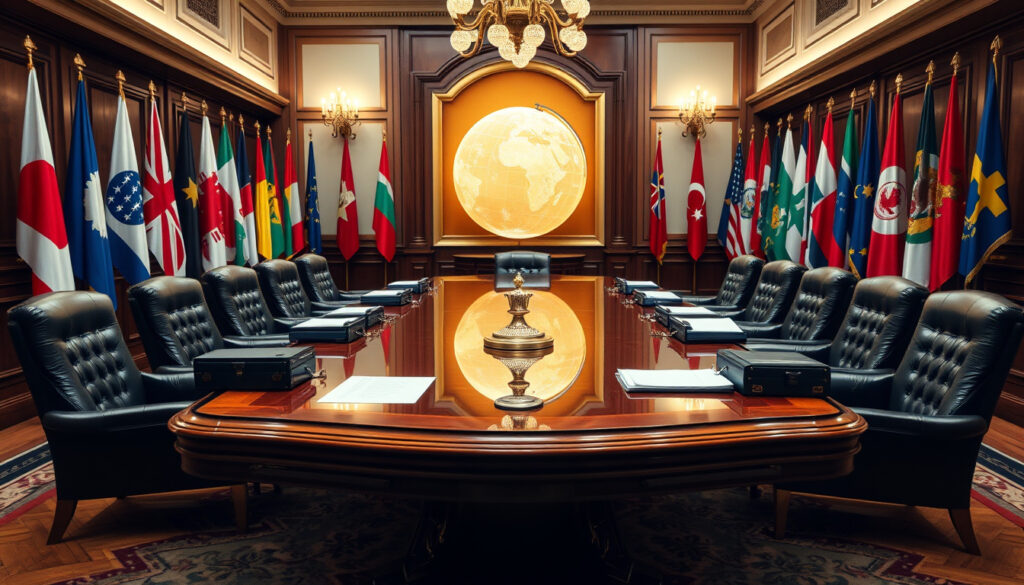
What Is a Diplomat – Roles, Duties and How to Become One
A diplomat is a government official appointed to represent their country’s interests abroad, protect its citizens, negotiate agreements, and foster international relations. Their roles encompass representation, advocacy, negotiation, information gathering, and crisis management, governed by frameworks like the Vienna Convention on Diplomatic Relations.
Diplomats serve as intermediaries between their home government and foreign entities, handling political, economic, social, and cultural affairs across the globe. From ancient envoys in Mesopotamia to modern professionals navigating digital geopolitics, diplomatic work has evolved substantially while retaining its core mission of managing international relations.
What Is a Diplomat?
Official representative of a state in foreign affairs
Negotiate treaties, promote interests abroad
Communication, cultural awareness, negotiation
Diplomatic immunity under Vienna Convention
Key Insights
- Diplomacy traces to ancient envoys, with the modern system solidifying after the Peace of Westphalia in 1648
- The Vienna Convention on Diplomatic Relations (1961) established universal standards protecting diplomatic agents from host-country jurisdiction
- U.S. Presidents serve as “Chief Diplomat” per the Constitution, negotiating treaties and directing foreign policy
- Modern diplomats face challenges including geopolitical tensions, climate crises, pandemics, and digital threats
- Digital diplomacy now involves social media engagement, countering disinformation, and virtual negotiations alongside traditional methods
| Aspect | Details |
|---|---|
| Appointing Body | National foreign ministry |
| Key Treaty | Vienna Convention on Diplomatic Relations (1961) |
| Common Ranks | Ambassador, Consul, Attaché |
| Global Count | Tens of thousands worldwide |
| Entry Requirement | Bachelor’s degree minimum |
| Entry Salary (U.S.) | $50,000–$70,000 annually |
What Does a Diplomat Do?
The daily responsibilities of diplomats vary by post and specialization, but the core functions remain consistent across all assignments. These professionals maintain continuous engagement with foreign governments while serving their nation’s strategic interests.
Core Functions
Diplomats operate as the primary channel of communication between their home government and foreign entities. According to the U.S. Department of State, their functions span multiple domains including political reporting, economic analysis, consular services, and public diplomacy initiatives.
Primary Responsibilities
- Representation: Acting as the “face” of their country in forums like the UN, conferences, and bilateral missions, conveying policies and positions to international audiences
- Protection of nationals: Assisting citizens abroad with emergencies, visas, passports, evacuations, or legal issues arising in foreign jurisdictions
- Negotiation and advocacy: Securing treaties, trade deals, and agreements on issues including security, human rights, trade, peacekeeping, environment, and health
- Information collection and reporting: Analyzing and reporting on political, economic, social, and cultural developments in host countries, advising on appropriate responses
- Promotion: Facilitating trade, commerce, technology transfer, cultural exchanges, and friendly relations through events and business support
- Crisis management: Handling disasters, upheavals, or attacks, coordinating with local authorities and ensuring citizen safety
- Protocol and implementation: Following diplomatic etiquette, implementing home-country policies, and coordinating with other governmental agencies
Daily tasks often involve meetings with officials, citizens, and stakeholders; drafting reports; negotiating deals; attending events; and managing consular services. Diplomats build trust-based relationships, adapt tactics for influence, and operate in diverse cultural environments, sometimes with limited amenities in remote postings.
Diplomat vs. Ambassador: Key Differences
Understanding the distinction between diplomats and ambassadors is essential for grasping the hierarchy of foreign service careers. While all ambassadors are diplomats, not all diplomats hold ambassadorial rank.
Understanding Diplomatic Ranks
Diplomats form part of a foreign service or diplomatic corps, with ranks spanning from attaché to ambassador—the highest diplomatic rank. According to Career Explorer, the profession encompasses various specializations including political, economic, consular, commercial, cultural, and public diplomacy officers.
Ambassador Distinction
An ambassador serves as the President’s top representative to a nation or international organization. According to the U.S. Department of State, ambassadors lead embassy staff—which may include representatives from up to 27 U.S. agencies—coordinate operations, and act as chief spokespersons. This role is elevated from general diplomats by leadership responsibility and political appointment rather than seniority alone.
Who Appoints Diplomats?
Appointments flow from national foreign ministries through competitive examination and selection processes. Entry-level positions typically require passing rigorous exams, security clearances, and specialized training at government institutes such as the U.S. Foreign Service Institute.
How to Become a Diplomat
The path to a diplomatic career varies by country, but common elements include educational requirements, competitive examinations, security vetting, and specialized training. For those pursuing the U.S. Foreign Service, the process involves multiple stages designed to identify candidates with the requisite skills and attributes.
Educational Foundation
Entry into diplomatic service typically requires a bachelor’s degree, often in international relations, political science, law, or languages. According to Northeastern University’s Graduate Programs, advanced degrees can provide competitive advantages in the selection process.
Required Skills and Qualities
- Skills: Negotiation, communication, analysis, problem-solving, cultural awareness, and language proficiency
- Qualities: Integrity, resilience, leadership, adaptability, intelligence, and energy under pressure
Gain relevant experience through internships with governmental agencies, military service, or work with international organizations like the UN or NGOs. These experiences strengthen applications and prepare candidates for the challenges of diplomatic postings.
Application Steps
- Earn relevant education and gain experience through internships, military service, or NGO work
- Prepare for and pass civil service or foreign service examinations
- Undergo security clearance, medical examinations, and comprehensive training
- Serve initial tours abroad, building expertise and demonstrating suitability for promotions
Career advancement follows promotions through the officer ranks, with senior roles—including ambassadorships—reserved for those who demonstrate exceptional performance over extended periods. Explore opportunities at U.S. Department of State career resources for current openings and requirements.
Salary Expectations
Entry-level U.S. Foreign Service Officers earn approximately $50,000–$70,000 annually, with figures rising to $100,000+ for mid-career professionals and $150,000+ for ambassadors. Compensation packages typically include benefits such as housing allowances and overseas post differentials. For context on broader economic indicators, review the GBP to USD exchange rate when considering international salary comparisons.
Diplomatic Immunity Explained
Diplomatic immunity represents one of the most distinctive features of diplomatic practice, providing legal protection that enables diplomats to perform their duties without fear of interference from host-country authorities.
What Diplomatic Immunity Covers
According to the Vienna Convention on Diplomatic Relations, diplomatic agents enjoy immunity from the jurisdiction of the host state for acts performed in their official capacity. This protection extends to family members accompanying diplomats and encompasses the diplomatic premises themselves, which remain inviolable.
Diplomatic immunity protects official acts rather than providing blanket protection for personal conduct. Serious crimes may result in a host country requesting the diplomat’s recall, and the sending state retains the right to waive immunity in specific circumstances. The immunity applies to acts performed in official capacity only, not to private matters or crimes unrelated to diplomatic functions.
Modern Context
In an era of digital communication and instant global connectivity, the principles established by the 1961 Vienna Convention continue to govern diplomatic practice. According to UBC’s School of Public Policy and Global Affairs, modern diplomats face the challenge of navigating confrontations alongside cooperation, managing complex relationships in an increasingly interconnected world.
Historical Evolution of Diplomacy
The practice of diplomacy has evolved significantly from ancient origins through the modern multilateral system. Understanding this trajectory provides essential context for appreciating contemporary diplomatic practice.
- Ancient origins: Envoys in Mesopotamia, Egypt, and other early civilizations served as messengers between rulers
- 1648: Westphalia: The Peace of Westphalia established the modern system of nation-states and resident ambassadors
- 1961: Vienna Convention: The Vienna Convention on Diplomatic Relations codified rules governing diplomatic privileges and immunities internationally
- Present day: Digital diplomacy complements traditional methods, with diplomats engaging through social media, countering disinformation, and conducting virtual negotiations alongside face-to-face diplomacy
Established Facts and Areas of Uncertainty
While the fundamental definition and role of diplomats remain consistent across nations, certain aspects of diplomatic practice vary by country and continue to evolve.
| Established Information | Information That May Vary |
|---|---|
| Universal definition per Vienna Convention | Country-specific recruitment processes |
| Core functions: representation, negotiation, protection | Salary structures differ significantly between nations |
| Diplomatic immunity applies to official acts | Training requirements and career advancement timelines |
| Ranks from attaché to ambassador | Political appointment criteria for senior positions |
| Need for cultural awareness and language skills | Specific degree requirements vary by ministry |
The Role of Diplomats in International Relations
Diplomats serve as the backbone of international relations, translating national policies into actionable agreements and managing the complex relationships between sovereign states. Their work encompasses everything from bilateral trade negotiations to multilateral peacekeeping operations.
According to Wikipedia’s analysis of diplomacy, these professionals drive negotiation and treaties for mutual gains, operating in forums ranging from the United Nations to bilateral summit meetings. The effectiveness of international cooperation—whether on climate change, trade disputes, or security concerns—depends substantially on the skills of the diplomats managing these relationships.
For additional context on global financial systems that interact with diplomatic work, examine how Dow Jones stock markets respond to diplomatic developments and international agreements.
Primary Sources and Expert Perspectives
“Diplomatic agents shall enjoy immunity from the jurisdiction of the host state for acts performed in their official capacity.”
— Vienna Convention on Diplomatic Relations, 1961
“The foreign service of the United States represents American interests around the world. Diplomats are the first line of national security, working to protect citizens and promote American values abroad.”
— U.S. Department of State
These foundational statements underscore the dual nature of diplomatic work: protecting national interests while facilitating international cooperation. For comprehensive treaty text, consult the official Vienna Convention documentation maintained by the United Nations.
Summary
A diplomat is a government official appointed to represent their country’s interests abroad, protect its citizens, negotiate agreements, and foster international relations. From handling political and economic affairs to managing crises and facilitating cultural exchange, diplomats serve as essential intermediaries between nations. The profession requires strong communication skills, cultural awareness, and the ability to navigate complex international challenges. Career paths typically involve competitive examinations, specialized training, and progressive assignments abroad, with compensation varying by country and experience level. The Vienna Convention on Diplomatic Relations provides the foundational framework governing diplomatic practice worldwide, establishing rules that enable diplomats to perform their duties with appropriate protections and privileges.
Frequently Asked Questions
What is the difference between a diplomat and an ambassador?
All ambassadors are diplomats, but not all diplomats are ambassadors. An ambassador is the highest-ranking diplomat, appointed by the head of state to represent the country to a specific nation or organization. Ambassadors lead embassy staff and coordinate diplomatic operations, while other diplomats serve in subordinate positions with varying specializations.
What qualifications do you need to become a diplomat?
Entry typically requires a bachelor’s degree in fields such as international relations, political science, law, or languages. Essential attributes include negotiation skills, cultural awareness, communication ability, and analytical capability. Competitive examination and security clearance processes vary by country.
What is diplomatic immunity?
Diplomatic immunity is legal protection granted to diplomatic agents under the Vienna Convention (1961). It shields diplomats from host-country jurisdiction for official acts and extends to family members and diplomatic premises. This protection enables diplomats to perform their duties without interference.
How much does a diplomat earn?
Entry-level U.S. Foreign Service Officers earn approximately $50,000–$70,000 annually, rising to $100,000+ for mid-career professionals and $150,000+ for ambassadors. Additional benefits often include housing allowances and overseas post differentials. Salaries vary significantly between countries.
What skills does a diplomat need?
Core skills include negotiation, communication, analysis, problem-solving, cultural awareness, and language proficiency. Personal qualities such as integrity, resilience, leadership, adaptability, and the ability to work under pressure are essential for success in this career.
Who appoints diplomats?
Diplomats are appointed by national foreign ministries through competitive processes. In the United States, the Department of State oversees Foreign Service officer selection. Appointments typically require passing rigorous examinations, security clearances, and completing specialized training.
What are the types of diplomats?
Diplomats specialize across various tracks including political, economic, consular, commercial, cultural, and public diplomacy. Each specialization focuses on different aspects of international relations, from trade negotiations to citizen services to cultural outreach.
What does a diplomat do daily?
Daily responsibilities vary by post and specialization but typically include meetings with foreign officials, drafting reports, negotiating agreements, attending events, and managing consular services such as visa processing or emergency evacuations. Building relationships and gathering information are constant priorities.
More related posts
 Things to Do with Kids in Ireland: Free Family Guide
 Pasha Kovalev: Life, Career, Marriage to Rachel Riley & Family
 Lauren Patel: Nationality, Age, Height, Movies, TV Shows & More
 Protected Characteristics: Meaning, List & Legal Rights
 20 cm in Inches: Exact 7.874″ Conversion + Ruler Guide
 Property for Sale in Fife: Prices, Areas & Buying Tips
 Charley Webb: Partner, Children, Career, and Life After Emmerdale
 Tippi Hedren: From Hitchcock Star to Lion Sanctuary Founder