Best Thermoses for Coffee – Top Lab-Tested Picks 2025
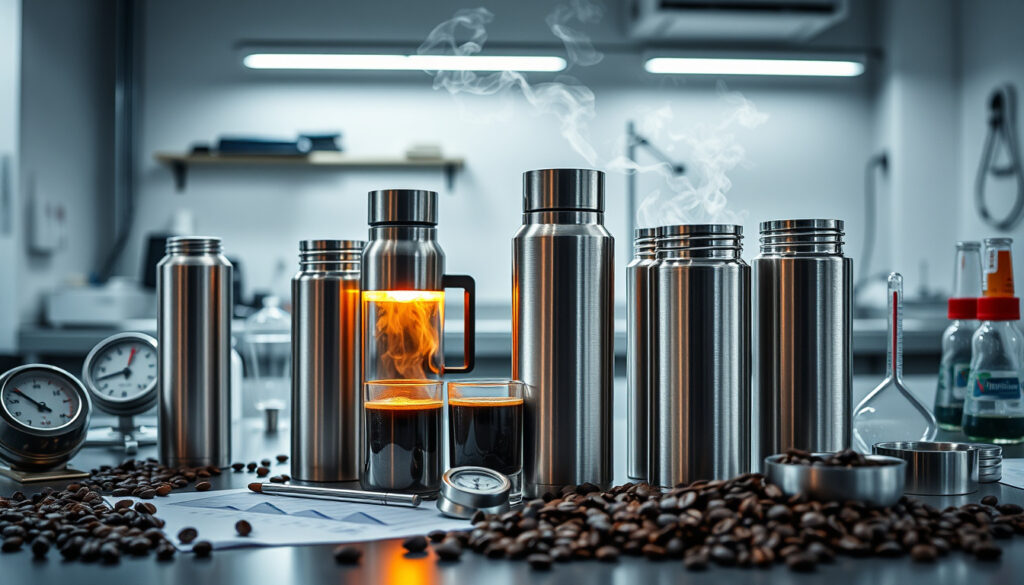
For coffee lovers who refuse to settle for lukewarm sips, investing in a quality insulated thermos has become essential. Whether commuting to the office, working from home, or spending long hours outdoors, the right thermos can keep your coffee at an optimal drinking temperature for hours on end. Recent independent tests across multiple publications have evaluated leading models based on heat retention, leakproof performance, durability, and value to determine which thermoses truly deliver.
The market offers an overwhelming range of options, from compact 12-ounce mugs designed for cupholder-friendly commutes to massive 64-ounce bottles built for group outings. Manufacturers consistently advertise impressive temperature retention figures, but real-world testing reveals significant variations between claims and actual performance. Understanding which features matter most for your specific needs—whether maximum heat retention, one-handed operation, or easy cleaning—can make the difference between a thermos that becomes a daily essential and one that ends up forgotten in a cabinet.
This guide compiles findings from extensive product testing by reviewers at HomeGrounds, Business Insider, CoffeeKev, and GearJunkie to provide an evidence-based comparison of the leading coffee thermoses available in 2025 and into 2026.
What Is the Best Thermos for Coffee?
The Stanley Classic Legendary Bottle consistently emerges as the top performer across independent reviews, earning recognition for its exceptional 24-hour heat retention, generous capacity options ranging from 32 to 64 ounces, and remarkable durability that has even survived direct exposure to car fires. Multiple testing sources confirm that coffee remains drinkable—maintaining around 140°F—after a full 24-hour period, with minimal temperature drop of approximately 4°F in the first six hours alone.
However, the “best” thermos ultimately depends on your specific use case. For daily commuters seeking a compact mug-style option, the Zojirushi Stainless Steel Insulated Mug offers superior leakproof performance in a cupholder-friendly size. Those prioritizing portability might prefer the Hydro Flask with its lightweight design and flex sip lid, while budget-conscious buyers find strong value in the Thermos Stainless King, which delivers 18-hour heat retention at under $40. The Yeti Rambler Bottle appeals to users who prioritize rugged durability above all other factors.
Best Overall Performance
24-hour retention | 32-64 oz
Best for Daily Commutes
Excellent retention | 12-20 oz
Best Lightweight Option
Strong retention | 12-20 oz
Best Budget Value
18-hour retention | 16-68 oz
Key Factors That Define Quality Coffee Thermoses
Reviewers across testing publications have converged on several critical attributes that separate high-performing thermoses from mediocre options. Understanding these factors helps consumers make informed purchasing decisions rather than relying solely on manufacturer claims.
- Vacuum insulation technology: Double-wall construction creates an insulating barrier that dramatically slows heat transfer, with premium models maintaining drinking temperature for 18-24 hours.
- Stainless steel construction: Most top-performing models use 18/8 grade stainless steel, which offers excellent temperature control, durability, and BPA-free food-safe interiors.
- Lid design impact: Screw-top lids consistently outperform sip-style lids in heat retention tests, though they sacrifice the convenience of one-handed operation.
- Capacity sizing: Larger capacities (40+ oz) work best for groups or extended outings, while 12-20 oz models fit standard car cupholders and daily commutes.
- Coffee-specific considerations: Narrow openings reduce evaporation but can complicate cleaning, while wider mouths facilitate both easier filling and residue removal.
- Weight and portability: The Thermos Stainless King weighs 1.44 lbs at 40 oz, while the Stanley reaches 1.8 lbs at 32 oz—factors that matter for active users.
- Cleaning requirements: Hand washing is recommended for most premium models to preserve vacuum seals and interior coatings, though some brands support top-rack dishwasher cleaning.
Comparison of Top-Rated Coffee Thermoses
| Model | Best For | Capacity | Heat Retention | Leakproof | Weight | Price Range |
|---|---|---|---|---|---|---|
| Stanley Classic Legendary Bottle | Overall/large groups | 32, 48, 64 oz | 24 hours (140°F after 24h) | Yes | 1.8 lbs (32 oz) | Budget-friendly |
| Zojirushi Stainless Steel Insulated Mug | Daily single-serve use | 12, 16, 20 oz | Excellent (best for mugs) | Yes (lockable flip-top) | 1.25 lbs (20 oz) | Premium (5-year warranty) |
| Hydro Flask Wide Mouth | Commutes/on-the-go | 12, 16, 20 oz | Strong | Yes (flex sip lid) | Lightweight | Mid-range |
| Thermos Stainless King | Value/bottle + cup | 16, 24, 40, 68 oz | 18 hours (verified) | Yes (two-part lid) | 1.44 lbs (40 oz) | Under $40 |
| Yeti Rambler (HotShot Cap) | Extreme durability | 18 oz | Good | Yes | Heavier | Premium |
How Long Does a Thermos Keep Coffee Hot?
Heat retention performance varies significantly across thermos models, with independent testing revealing that actual results often differ from manufacturer specifications. The most rigorous reviews conduct standardized tests using boiling water initially, then measure temperature at regular intervals to establish objective benchmarks. Some testers have also performed real-world coffee tests, which generally show slightly shorter retention times due to the lower initial temperature and composition of brewed coffee compared to plain water.
Understanding Heat Retention Test Results
The Stanley Classic Legendary Bottle demonstrated the strongest performance in HomeGrounds testing, maintaining approximately 140°F after a full 24-hour period. Temperature decline proved remarkably gradual, dropping only about 4°F during the first six hours of testing. This consistency makes the Stanley particularly suitable for users who prepare coffee in the morning but may not consume it until evening hours.
Zojirushi occupies the top position among mug-style thermoses, with testing confirming that its retention exceeds the average for this category. The 5-year warranty backing these mugs reflects the manufacturer’s confidence in their vacuum insulation technology. Meanwhile, the Thermos Stainless King validated its 18-hour manufacturer claim across multiple review sources, though testers noted that screw-top designs consistently outperformed sip-style lids in maximum retention performance.
Most standardized tests begin with boiling water, which produces longer retention figures than real-world coffee usage. Actual coffee temperatures typically start lower and may decline 1-2 hours faster than water-based test results suggest. Reviewers at HomeGrounds and CoffeeKev emphasize real-world coffee temperature measurements over manufacturer specifications.
Size and Use Case Considerations
Capacity directly influences how long your coffee remains hot. Smaller 12-20 ounce thermoses designed for cupholder use generally maintain optimal drinking temperature for the typical commute duration, roughly 2-4 hours depending on ambient conditions and initial temperature. Larger bottles exceeding 40 ounces provide extended retention suitable for full workdays, outdoor adventures, or sharing among groups.
Users planning to prepare coffee in the evening for morning consumption should prioritize models with demonstrated 12+ hour retention. Those needing coffee to stay hot through a standard workday will find most premium options sufficient, though the specific duration depends on both the model and environmental factors such as ambient temperature and whether the thermos remains sealed or is repeatedly opened.
What Makes a Thermos Leak-Proof for Coffee?
Leakproof performance depends critically on lid design and seal quality rather than the thermos body itself. All top-performing models in current reviews feature double-wall vacuum-insulated stainless steel construction that provides excellent temperature control, but lid engineering determines whether your bag, car interior, or desk remains dry when carrying filled thermoses.
Lid Design Variations and Performance
Traditional screw-top lids, as found on the Stanley Classic Legendary and Thermos Stainless King, deliver the most reliable seal through simple mechanical threading that creates a compression seal against an internal gasket. The Stanley’s tight screw lid even doubles as a drinking cup, though this design requires two-handed operation and pouring rather than direct sipping.
Flip-top and sip lids, featured on the Zojirushi and Hydro Flask, offer greater convenience for one-handed use during commutes. The Zojirushi includes a lockable flip-top mechanism with a vent that prevents pressure buildup while maintaining a secure seal when locked. Hydro Flask’s flex sip lid provides similar convenience with a secure closure, though reviewers note that both designs sacrifice slight retention performance compared to screw-top alternatives.
Gasket and seal integrity degrades over time with use and exposure to temperature extremes. Hand washing helps preserve these components longer than dishwasher cleaning. Inspect seals periodically for signs of wear, cracking, or deformation that could compromise leakproof performance. Replacement parts are available for most major brands.
Durability and Construction Quality
Beyond leakproofing, overall construction quality determines how well a thermos withstands daily use and accidental impacts. The Stanley and Yeti Rambler consistently earn praise for bombproof durability. Anecdotal reports from users and reviewer testing confirm that Stanley thermoses have survived direct exposure to car fires without compromising their vacuum seals or temperature performance.
Yeti constructs their Rambler bottles with dent-resistant materials that maintain structural integrity even under significant pressure. The Thermos brand similarly delivers reliable longevity at accessible price points, with users reporting years of consistent performance from Stainless King models. This durability comes with a weight trade-off, as the most rugged designs typically weigh more than their lightweight competitors.
How to Choose the Best Thermos for Your Coffee Needs?
Selecting the ideal coffee thermos requires matching specific product characteristics to your personal usage patterns, priorities, and constraints. A thermos that excels for one person may prove frustratingly inadequate for another with different requirements. Evaluating your primary use case, budget, and practical considerations helps narrow the field to models that genuinely fit your lifestyle.
Matching Thermos Features to Your Routine
For daily commuters who carry coffee in their car, cupholder compatibility becomes paramount. Models in the 12-20 ounce range from Zojirushi and Hydro Flask fit standard automotive cup holders, making them practical choices for transit use. The Hydro Flask’s lightweight design and flex sip lid facilitate one-handed operation while navigating traffic or morning routines.
Office workers who prepare coffee in the morning and sip throughout the day benefit from larger-capacity options that eliminate the need for refills. The Stanley and Thermos Stainless King provide sufficient volume for extended workdays, with the Stanley’s 48-64 ounce capacities even supporting group sharing scenarios. Those working from home may prioritize convenience features like easy cleaning and aesthetic appeal alongside temperature retention.
Outdoor enthusiasts and travelers requiring maximum durability should consider the Yeti Rambler or Stanley for their proven resilience under demanding conditions. While these rugged models carry higher price tags and increased weight, their ability to withstand impacts, pressure changes, and extreme temperatures provides reliability that lighter alternatives cannot match.
Larger capacity thermoses like the Stanley (64 oz) and Thermos Stainless King (68 oz) may prove bulky for personal daily use despite their impressive volume. Consider whether you genuinely need multi-serving capacity or whether a smaller, more portable model would serve your routine better.
Budget-Friendly Options Under $40
The Thermos Stainless King consistently appears in budget recommendation lists across multiple review sources, delivering premium features including 18-hour heat retention, stainless steel construction, and a bottle-plus-cup design at price points below $40. This value proposition makes it an attractive entry point for users seeking strong performance without significant investment.
While cheaper alternatives exist below the $20 threshold, testing data from GearJunkie and other sources suggests that performance and durability often suffer at significantly lower price points. The Thermos brand occupies a sweet spot where quality construction meets accessibility, though users with higher budgets can expect proportionally improved retention and durability from premium alternatives.
Cleaning and Maintenance Requirements
Maintenance practices significantly impact both hygiene and long-term performance retention. Most manufacturers of premium thermoses recommend hand washing to preserve vacuum seals, interior coatings, and sealing gaskets. Dishwasher cleaning, while convenient, can degrade these components over time through harsh detergents and high temperatures. For those interested in future adjustments, the $Canadian time change 2025 provides the latest information.
Models with dishwasher-safe designations, including the Thermos Stainless King, Hydro Flask, and Yeti Rambler (top-rack only), offer more flexibility for users who prefer machine cleaning. However, reviewers at CoffeeKev note that immediate rinsing after use prevents coffee oils from staining interior surfaces and developing persistent odors. For deep cleaning, disassembling lids fully and using baking soda or vinegar solutions helps remove built-up residue and neutralize smells.
Screw-top designs like the Stanley and Thermos offer an advantage in cleaning accessibility, as the cup lid attachment provides wider opening access for thorough scrubbing. Narrow-mouth mugs may require bottle brushes to reach all interior surfaces effectively. Establishing consistent cleaning habits from the start preserves both hygiene and performance over the thermos lifespan.
Timeline: Coffee Thermos Development and Testing
The evolution of insulated beverage containers reflects broader advances in materials science and manufacturing while maintaining core vacuum insulation principles established decades ago. Understanding this context helps buyers appreciate why certain designs have persisted while others represent recent innovations.
- 1892: James Dewar invents the vacuum flask, establishing the fundamental insulation technology that all modern thermoses utilize.
- 1904: Thermos GmbH commercializes Dewar’s invention under the recognizable brand name that persists today.
- 2018: Zojirushi releases the SM-KHE48 model, establishing benchmarks for mug-style insulated coffee containers that remain relevant in current testing.
- 2022-2023: Stanley gains viral attention through social media durability demonstrations, including fire resistance tests that cement its reputation for extreme toughness.
- 2024: Multiple publications conduct comprehensive coffee thermos roundups, establishing standardized testing methodologies and comparative rankings.
- 2025-2026: Current testing confirms Stanley’s overall leadership while identifying category-specific winners, with emphasis on real-world coffee temperature measurements over manufacturer specifications.
What We Know vs. What Remains Unclear
Transparency about the scope and limitations of available testing data helps readers calibrate their expectations appropriately. While significant evidence supports certain conclusions, several aspects of coffee thermos performance remain insufficiently documented or subject to meaningful variation.
| Established Information | Areas of Uncertainty |
|---|---|
| Stanley provides best-in-class 24-hour retention | Long-term seal durability beyond 2-3 years |
| Screw-top lids outperform sip lids for heat retention | Specific retention performance with cream/milk additions |
| Zojirushi leads mug-style category for single servings | Objective comparison of coffee flavor preservation |
| Thermos Stainless King delivers verified 18-hour retention | Performance variation across production batches |
| Stainless steel 18/8 construction is BPA-free and food-safe | Environmental impact comparisons between brands |
| Dishwasher cleaning degrades seals faster than hand washing | Optimal replacement intervals for gaskets and seals |
The Role of Vacuum Insulation Technology
Double-wall vacuum insulation represents the gold standard for thermal containers, creating an empty space between inner and outer stainless steel walls that eliminates conductive and convective heat transfer. This technology, first commercialized over a century ago, remains the foundation of all high-performing coffee thermoses currently available.
The vacuum itself acts as an almost perfect insulator because heat cannot conduct through empty space. Radiation, which can transfer through a vacuum, is minimized through reflective internal coatings applied to the inner walls. Together, these mechanisms dramatically slow the rate at which hot coffee loses thermal energy to its surroundings.
Real-world performance varies based on ambient temperature, initial coffee temperature, fill level, and frequency of lid opening. A thermos filled to capacity with near-boiling coffee in a climate-controlled office will obviously retain heat longer than the same thermos partially filled with lukewarm coffee in a cold outdoor environment. Understanding these variables helps users set realistic expectations rather than expecting identical results across different conditions.
What Reviewers and Testers Say
Multiple independent review sources have published comprehensive testing data that informed these recommendations. Their methodologies vary but share common elements including standardized temperature measurements, extended duration testing, and practical usage evaluation.
“Stanley leads for versatility, but choose Zojirushi for mug convenience or Yeti for abuse-prone use. Tests emphasize real-world coffee temps over claims.”
“Screw-top excels over sip lids for max retention. Traditional designs keep coffee drinkable all day without sacrificing core temperature performance.”
These sources collectively represent thousands of hours of hands-on testing across various use scenarios, providing the most comprehensive evidence base available for consumer purchasing decisions. Their convergence on similar conclusions—particularly regarding Stanley’s overall performance and category-specific recommendations—strengthens confidence in these findings.
Summary and Recommendations
The evidence clearly establishes the Stanley Classic Legendary Bottle as the top-performing coffee thermos for users prioritizing maximum heat retention, substantial capacity, and proven durability. Its 24-hour temperature maintenance, generous size options up to 64 ounces, and legendary toughness make it the most versatile choice for diverse scenarios from personal daily use to group outings.
However, no single thermos perfectly serves all needs. The Zojirushi Stainless Steel Insulated Mug offers superior convenience for commuters requiring cupholder-friendly dimensions with reliable leakproofing. The Hydro Flask balances lightweight portability with strong performance. The Thermos Stainless King delivers excellent value at accessible price points. The Yeti Rambler provides unmatched durability for demanding conditions.
For readers seeking related guidance, comprehensive reviews of Ride On Lawn Mower – Best for Hills and Acres and Gammon in Air Fryer – Timings and Temperature Guide provide additional practical buying guidance across different product categories.
Frequently Asked Questions
How do you clean a coffee thermos?
Rinse immediately after use to prevent coffee oils from staining. Hand wash with warm water and mild detergent, using a bottle brush for narrow-mouth designs. For stubborn odors, soak with baking soda and water mixture or diluted vinegar. Avoid dishwashers unless the manufacturer explicitly approves machine cleaning.
What is the best affordable thermos for coffee?
The Thermos Stainless King offers the best value, providing 18-hour heat retention, stainless steel construction, and multiple size options at prices under $40. It includes a bottle and cup lid combination, making it versatile for various drinking preferences.
What size thermos is best for commuting?
Models with 12-20 ounce capacities fit most car cupholders and provide sufficient volume for a standard commute. The Zojirushi and Hydro Flask both offer excellent retention in this range with convenient sip or flip-top lids designed for one-handed operation.
Are stainless steel thermoses better than plastic for coffee?
Stainless steel thermoses offer superior heat retention, greater durability, and no risk of staining or retaining coffee flavors compared to plastic alternatives. Most premium models use 18/8 grade stainless steel that is BPA-free and completely food-safe.
What is the difference between a thermos and a tumbler?
Thermoses typically feature vacuum insulation between double walls and seal completely for maximum heat retention. Tumblers often have lids with drinking holes, may lack true vacuum insulation, and prioritize convenience over extended temperature maintenance. Thermoses generally outperform tumblers for keeping coffee hot over several hours.
Does Yeti make a good coffee thermos?
Yes, the Yeti Rambler with HotShot Cap delivers strong heat retention with exceptional durability. It performs well in leakproof testing and resists dents and damage that would compromise lesser containers. However, its 18-ounce capacity and heavier weight may limit appeal for users prioritizing portability over ruggedness.
More related posts
 Peter Cushing’s Death and Lasting Star Wars Legacy
 David James: Footballer and Irish Singer – Who Is Who
 Mike Bailey (Actor): Skins Sid Now, Age, Teacher Life
 Dale Winton: Who Inherited His £2.1 Million Fortune
 How to Make Yorkshire Puddings – Perfect Rise Every Time
 India and Pakistan War: History, Comparison, and Current Conflict
 Biggest Dog in the World: Tallest, Heaviest & Friendliest
 Coffee Shops Near Me: Dublin’s Best Cafés by Neighborhood