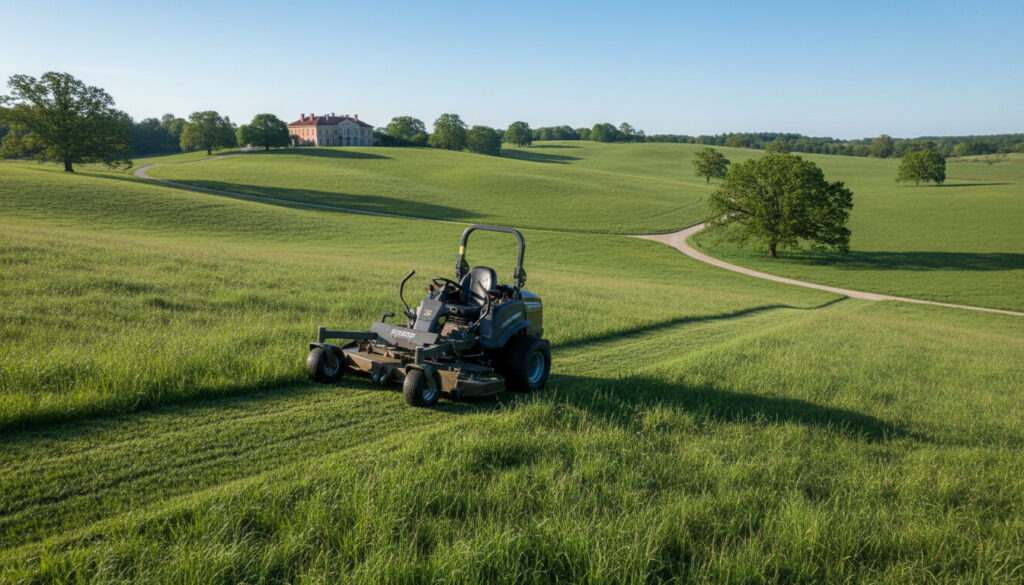
Ride On Lawn Mower – Best for Hills and Acres
Ride-on lawn mowers have evolved from simple cutting machines to sophisticated landscaping equipment capable of handling diverse terrain. For homeowners managing acreage or challenging slopes, selecting the right machine requires balancing engine power, deck dimensions, and transmission type against property-specific demands.
Current market leaders emphasize durability and operator comfort, with gas-powered tractors dominating recommendations for hilly terrain while electric alternatives gain traction for smaller, flat yards. Brands such as John Deere, Cub Cadet, and Toro currently set benchmarks for reliability according to consumer testing organizations and equipment reviewers.
This analysis examines pricing structures, mechanical specifications, and suitability factors to identify which configurations deliver optimal value for different property types.
What Is the Best Ride-On Lawn Mower?
Best overall status depends on specific property characteristics, though certain models consistently earn top recommendations across professional reviews.
| Top Brands John Deere, Cub Cadet, Husqvarna, Toro |
Price Ranges $1,790 to $24,900 |
Yard Size Fit 0.5 to 5+ acres |
Power Types Gas dominant, Electric emerging |
Key Market Insights
- The John Deere S130 delivers best overall performance for properties up to 1.5 acres, including hill handling capabilities.
- Cub Cadet XT1 LT50 offers optimal value with a 50-inch deck and 24 HP Kohler engine according to equipment testing.
- Toro TimeCutter dominates zero-turn categories for flat areas up to 4 acres.
- Gas engines maintain superiority for slopes and dense grass due to torque advantages.
- Electric models suit flat yards under 0.5 acres but lack proven long-term durability data.
- Price spreads span from under $2,000 entry points to $24,900 premium units.
- Deck sizes between 42 and 50 inches maximize efficiency for single-acre properties.
Technical Specifications Overview
| Specification | Average/Standard | Range/Notes |
|---|---|---|
| Price | $3,000 (mid-range) | $1,790 – $24,900 |
| Top Speed | 6-7 mph | 7+ mph (zero-turn) |
| Deck Size | 42-50 inches | 54+ inches (large properties) |
| Engine Power | 22-25 HP | V-twin Kohler/Kawasaki |
| Fuel Capacity | 3 gallons | Varies by model |
| Turning Radius | 16 inches | Zero-turn: pivot in place |
How Much Does a Ride-On Lawn Mower Cost?
Pricing tiers reflect significant variation in engine sophistication, deck materials, and transmission systems. Entry-level lawn tractors such as the Cub Cadet XT1 series start near $1,790, offering adequate power for standard residential plots.
Mid-range configurations including the Toro TimeCutter typically command approximately $3,799, incorporating hydrostatic transmissions and enhanced suspension systems. Premium commercial-grade models reach $24,900, featuring heavy-duty frames and professional power ratings.
Manufacturer pricing fluctuates by region and dealer inventory. Prospective buyers should verify current 2025 pricing directly with authorized dealers, as equipment aggregators indicate significant variability based on local market conditions.
Riding Mower vs. Lawn Tractor: Key Differences
Terminology within the ride-on category often creates confusion. Lawn tractors represent a specific subset designed for stability and versatility, while zero-turn mowers optimize for speed and maneuverability on flat terrain.
Zero-Turn vs. Lawn Tractor Performance
Zero-turn mowers utilize independent wheel drives to pivot within their own footprint, achieving speeds exceeding 7 mph and navigating efficiently around trees and landscaping. However, safety assessments indicate these machines suit flat areas up to 4 acres rather than sloped properties.
Traditional lawn tractors sacrifice absolute speed—typically operating at 6-7 mph—for superior stability on inclines. Their steering-wheel controls prove more intuitive for operators transitioning from walk-behind mowers.
Electric or Gas Power?
Gasoline engines dominating the market deliver 22-25 HP through V-twin configurations, providing the torque necessary for dense grass and hill climbing. Models utilizing Briggs & Stratton engines demonstrate operational lifespans spanning decades with routine maintenance.
Battery-electric alternatives from manufacturers including Ego Power+ and Greenworks offer quieter operation and eliminate oil changes, yet current technology limits effective use to flat yards under 0.5 acres. Equipment testing suggests battery longevity and replacement costs remain less predictable than gasoline engine rebuilds.
Are Ride-On Mowers Suitable for Hills and Small Yards?
Terrain characteristics determine appropriate machine selection more than simple acreage calculations. Properties measuring one acre or less with significant elevation changes require different specifications than flat five-acre plots.
Hill Handling Capabilities
Lawn tractors including the John Deere S130 and Cub Cadet XT1 series maintain stability on moderate slopes due to lower centers of gravity and stable deck configurations. Operator demonstrations confirm these models handle inclines up to 1.5 acres effectively.
Zero-turn mowers present rollover risks on hills due to their high-speed design and lever-steering mechanisms. Consumer safety organizations recommend lawn tractors exclusively for sloped terrain exceeding gentle grades.
Small Yard Efficiency
Compact properties benefit from mid-size deck configurations between 42 and 50 inches. The Cub Cadet XT1 LT50 with its 16-inch turning radius maneuvers efficiently within fenced areas while the 50-inch deck reduces mowing passes compared to smaller 36-inch alternatives.
For single-acre properties with hills, the Cub Cadet XT1 LT50 represents an optimal balance of power, deck width, and value within the $2,000-$3,000 range. Verify local availability and current year specifications through authorized dealers.
Ride-On Mower Lifespan and Maintenance Timeline
Durability expectations vary significantly between power sources and maintenance adherence. Gas-powered units demonstrate longer proven service histories, while electric technology continues maturing.
- Initial Ownership: Break-in period requires first oil change and deck belt inspection within 5-10 operating hours for gas models.
- Seasonal Maintenance: Annual blade sharpening, air filter replacement, and hydrostatic transmission fluid checks maintain optimal performance.
- Mid-Life Service: Years 5-10 typically require battery replacement (electric), spark plug changes, and potential deck spindle rebuilds.
- Long-Term Durability: Product testing confirms gas engines from Troy-Bilt and Briggs & Stratton last decades with proper care.
- Power Cell Cycles: Electric mower batteries require replacement every 3-5 years depending on usage patterns, though exact intervals remain under observation due to limited long-term field data.
- End of Service: Frame integrity and engine rebuild costs typically determine retirement age, with well-maintained tractors exceeding 15-20 years.
What Are the Certainties and Variables in Ride-On Mower Selection?
Objective comparisons separate established performance metrics from market uncertainties affecting purchase decisions.
| Established Information | Uncertain Variables |
|---|---|
| Gas engines deliver superior torque for hills and dense grass | Long-term battery replacement costs for electric models |
| Lawn tractors provide stability superior to zero-turns on slopes | Exact 2025 pricing fluctuations by region |
| Briggs & Stratton and Kohler engines demonstrate multi-decade longevity | Resale values for emerging electric brands |
| 42-50 inch decks suit 1-acre properties optimally | Future EPA regulations affecting gas engine availability |
Market Context and Technology Shifts
The landscaping equipment sector experiences gradual electrification similar to automotive transitions, though adoption rates for ride-on mowers lag behind walk-behind units due to power requirements. Environmental regulations continue influencing engine emission standards, potentially affecting future gasoline model availability.
Battery technology improvements promise extended runtime for electric riding mowers, yet current market data indicates gas maintains dominance for properties exceeding half an acre or containing topographical variation. As Vodafone UK 2G Shutdown 2030 – Timeline and Customer Guide illustrates regarding communication infrastructure, legacy technology transitions require careful timing to avoid service disruptions—similar considerations apply to maintaining aging gas equipment versus early electric adoption.
Expert Assessments and Testing Sources
Independent evaluations provide crucial validation for manufacturer claims regarding hill stability and cutting performance.
“Lawn tractors prove more stable on slopes compared to zero-turn-radius mowers, making them the safer choice for hilly properties.”
— Consumer Reports, Riding Mower Property Guide
“The John Deere S130 stands out as the best overall riding lawn mower for most users due to its smooth ride and tight turning radius.”
— Bob Vila, Best Riding Lawn Mower Analysis
“Gas models like Troy-Bilt with Briggs & Stratton engines last decades with proper maintenance, while battery technology continues improving.”
— TechGearLab, Lawn Mower Testing
Summary of Key Considerations
Selecting optimal ride-on equipment requires matching mechanical specifications to terrain realities. Gas-powered lawn tractors between 42-50 inches suit hilly single-acre properties, while zero-turn models maximize efficiency on flat larger areas. Budget-conscious buyers find viable entry points near $1,800, though financing considerations—including options discussed in Extremely Bad Credit Loans – Realistic Options in 2025—may influence purchasing timelines for premium models exceeding $3,000.
Common Questions
How Fast Do Ride-On Mowers Travel?
Lawn tractors typically reach 6-7 mph, while zero-turn models exceed 7 mph on flat terrain. Speed varies based on transmission type and engine power.
What Safety Features Matter Most?
Rollover protection systems and stable deck designs prove essential for hill operation. Zero-turn models require practice with lever controls to prevent tipping.
Can You Find Quality Models Under $2,000?
Cub Cadet XT1 series and entry-level tractors start around $1,790-$2,000, though extensive features and larger decks typically require higher investment.
Should You Consider Used Equipment?
Gas models from Troy-Bilt and Briggs & Stratton demonstrate decades of service life when maintained, making pre-owned tractors viable for budget-conscious buyers.
What Deck Size Suits a 1-Acre Property?
Decks measuring 42 to 50 inches optimize cutting efficiency for single-acre yards while maintaining maneuverability around obstacles and landscaping.
How Do Zero-Turn Mowers Handle Obstacles?
Zero-turn models excel at navigating trees and flower beds due to independent wheel drives allowing 360-degree pivoting. This agility comes at the cost of hill stability.
More related posts
 Thick of It Lyric : Full Song Text, Meaning, Ver ion & More
 Sea of Stars Maldives: Real, Safe Swim & Best Time
 Drive to Survive Season 7: Release Date, Episodes & Verstappen
 Lauren Patel: Nationality, Age, Height, Movies, TV Shows & More
 Time in Sri Lanka – Current Time, Zone and No DST
 HMRC May Fuel Charge Changes: New VAT Rates for 2025-2026
 Cast of Wayne’s World – Full Cast, Cameos and Insights
 EasyJet Customer Service Number – Free 0800 UK 24/7