Sea of Stars Maldives: Real, Safe Swim & Best Time
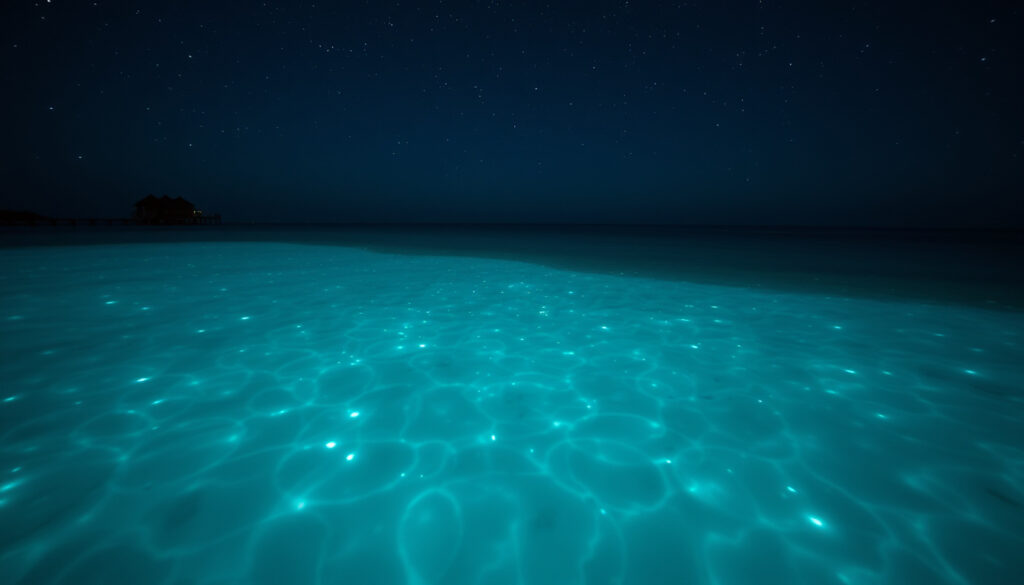
There is something almost otherworldly about standing knee-deep in warm ocean water as the sand beneath your feet begins to glow. That is exactly what happens on Vaadhoo Island, where the Sea of Stars phenomenon transforms ordinary waves into ribbons of electric blue light after dark. If you have been wondering whether this spectacle is real, safe, or worth planning a trip around, read on for a straight-forward guide backed by science and traveler accounts.
Location: Vaadhoo Island, Raa Atoll ·
Cause: Bioluminescent phytoplankton ·
Peak Season: June to October ·
Best Viewing Time: After sunset
Quick snapshot
- Real natural phenomenon on Vaadhoo Island (Barcelo)
- Caused by Lingulodinium polyedrum plankton (A-Z Animals)
- Visible June to October each year (Thrillophilia)
- Wet season starts May, peaks June–October (A-Z Animals)
- New moon nights offer darkest skies (Tripadvisor)
- Water temperature peaks at 80–90°F late summer (A-Z Animals)
- Book accommodation on Raa Atoll for best access (Tripadvisor)
- Plan around new moon dates for peak glow (Thrillophilia)
- Guided boat tours available from Maafushi (Tripadvisor)
Use this quick reference to orient your planning before diving into details below.
| Label | Value |
|---|---|
| Primary Location | Vaadhoo Island, Raa Atoll |
| Distance from Malé | 200 km north |
| Phenomenon Cause | Bioluminescent phytoplankton |
| Plankton Species | Lingulodinium polyedrum |
| Viewing Season | June to October |
| Optimal Moon Phase | New moon or 5 days after full moon |
| Swim Safety | Generally safe, no toxins |
| Alternative Island | Mudhdhoo Island, Baa Atoll |
What Is the Sea of Stars in the Maldives and Is It Safe to Swim In?
The Sea of Stars refers to the glowing blue waves that appear along certain Maldivian beaches at night, most famously on Vaadhoo Island in Raa Atoll. The effect comes from bioluminescent phytoplankton called Lingulodinium polyedrum, a type of dinoflagellate that emits blue light when the water is disturbed. When waves crash or swimmers move through the water, the plankton react by producing a soft, electric glow that can last several seconds before fading.
Vaadhoo Island sits roughly 200 km north of Malé, surrounded by a protective reef that creates a calm lagoon—an ideal environment for these plankton to thrive. According to A-Z Animals, the plankton blooms most heavily during the wet season when ocean temperatures rise, and the reef structure traps the organisms close to shore where visitors can easily see them.
Cause of the phenomenon
Lingulodinium polyedrum produces light through a chemical reaction involving luciferin and luciferase, similar to the process seen in fireflies. The plankton use this bioluminescence as a defense mechanism—glowing startles predators and can attract larger animals that eat the plankton’s predators. When you wade into the water, you are essentially triggering a natural alarm system, and the resulting flash is genuinely spectacular against a dark shoreline.
The plankton species found in the Maldives is safe for human contact, unlike some toxic varieties that bloom in other parts of the world.
The implication: choosing Vaadhoo over other islands means accepting both the most accessible viewing and the most tourist-heavy crowds.
Primary location: Vaadhoo Island
Vaadhoo Island has become the go-to destination for this phenomenon partly because of its accessible location within Raa Atoll and partly because local tourism infrastructure has developed around the attraction. The beach here was even used as a filming location for the movie Life of Pi, which helped cement its reputation worldwide, according to Barcelo. Visitors who stay on the island overnight have the best chance of witnessing the glow, as conditions can vary night by night.
Is the Sea of Stars in the Maldives Real?
Yes, the Sea of Stars is a real natural phenomenon backed by scientific explanation. Skeptics sometimes wonder whether the glowing beach is exaggerated or entirely fabricated for tourism, but multiple independent travelers and scientific sources confirm the effect occurs, particularly during the peak season from June to October. The glow is caused by living organisms—plankton that genuinely emit blue light when disturbed—not special lighting effects or digital manipulation.
Scientific explanation
Dinoflagellates like Lingulodinium polyedrum are single-celled organisms found in oceans worldwide. Under normal conditions, their bioluminescence is too faint to see in daylight. At night, especially during the monsoon season when plankton concentrations are highest, the cumulative glow becomes visible. Research from A-Z Animals indicates that water temperature, salinity, and tidal patterns all influence when and where blooms occur, with late summer conditions favoring the most intense displays.
Myths and misconceptions
One common misconception is that the Sea of Stars is a fixed attraction that occurs every night without fail. In reality, the phenomenon is unpredictable. Even during peak season, there is no guarantee of a strong glow on any given night. According to LBB, factors like cloud cover, moonlight, and plankton density mean some nights yield brilliant displays while others show little or no glow. Travelers who plan their entire Maldives trip around a single night on Vaadhoo risk disappointment.
Resort lights and infrastructure can reduce the dramatic effect of bioluminescence, making remote islands or quieter coves preferable for the best viewing experience.
What this means: if your priority is raw visual impact rather than convenience, seeking out quieter coves away from resort infrastructure will reward you.
Is It Safe to Swim in the Sea of Stars?
Swimming in the Sea of Stars is generally considered safe. The bioluminescent plankton in the Maldives are not toxic to humans, and contact with the water poses no known health risks. In fact, movement through the water makes the glow brighter, which many visitors find magical rather than alarming. According to A-Z Animals, the plankton pose no threat, and the glowing effect is simply the organisms responding to physical stimulation.
Safety risks
While the plankton themselves are harmless, night swimming in the ocean always carries inherent risks regardless of bioluminescence. Visibility is severely reduced after dark, and swimmers can misjudge depth, encounter unexpected currents, or collide with submerged objects. The Lovers Passport advises swimming with a partner, staying close to shore, and following all local guidance. The excitement of glowing water can cause people to venture farther out than they safely should.
Swimming guidelines
If you plan to swim in the Sea of Stars, keep these practical points in mind: stay within depth you can comfortably stand in, avoid churning the water unnecessarily as that can harm the plankton, wear water shoes on rocky areas, and never swim under the influence of alcohol. Guided tours often provide floating devices and trained guides who know the shoreline, which reduces risk compared to solo exploration. The beach is open 24 hours according to Thrillophilia, but that does not mean all hours are equally safe.
Night swimming and snorkeling carry real dangers beyond the glow itself—reduced visibility, unexpected currents, and limited emergency response make guided experiences the safer choice for most visitors.
The catch: the magic of glowing water should never override basic ocean safety—no guided tour is worth swimming beyond your depth.
When Can I See Sea of Stars in Maldives?
The peak viewing window for the Sea of Stars in the Maldives runs from June to October, coinciding with the wet monsoon season when warm ocean temperatures and nutrient-rich waters fuel plankton blooms. According to Thrillophilia, the best displays happen 5 days after a full moon when skies are darkest, or during new moon phases when there is no moonlight to wash out the glow.
Best months
Travelers who want the highest probability of seeing the phenomenon should target July through September, when water temperatures reach their peak around 80–90°F and plankton concentrations are highest. Kuoni documented sightings in late September and late October on different atolls, confirming that the season extends longer than some sources suggest. The trade-off is that this is also the wet season, with higher humidity and occasional rain showers.
Optimal conditions
Beyond timing your visit to the right months, consider these environmental factors: warm water temperatures above 75°F, low wave action that allows plankton to concentrate, dark skies without moonlight, and minimal artificial light from nearby resorts. According to A-Z Animals, variables like water temperature, salinity, and tidal patterns affect whether the glow appears on any given night. Visiting multiple nights increases your chances, as does staying on or very near Vaadhoo Island rather than day-tripping from a distant resort.
Peak plankton activity during the rainy season also attracts marine life like manta rays, making your trip potentially richer than just the glow itself.
The pattern: the same conditions that concentrate plankton draw predators and marine life, turning a Sea of Stars trip into a potential bonus wildlife encounter.
Vadhoo Island Maldives Guide: Sea of Stars and Travel Tips
Vaadhoo Island is located in Raa Atoll, approximately 200 kilometers north of Malé, and is accessible by speedboat or seaplane depending on your accommodation. While it is possible to day-trip from Malé or nearby islands, staying overnight on Vaadhoo gives you the flexibility to check conditions each night and head to the beach whenever the timing feels right. Tripadvisor notes that staying nearby maximizes your chances of catching the glow on at least one night during your visit.
How to get there
Most visitors reach Raa Atoll via Malé International Airport, then transfer by domestic flight or boat to their resort or guesthouse. Several resorts in Raa Atoll offer dedicated Sea of Stars viewing as part of their experience packages. Guided boat tours also operate from Maafushi, a nearby island with numerous tour operators, providing an organized alternative for travelers who prefer not to arrange independent transport.
Booking and costs
Accommodation options on Vaadhoo and surrounding islands range from budget guesthouses to luxury resorts. Tour costs vary widely, with boat tours from Maafushi typically ranging from affordable day trips to premium night-experience packages. Research from Viva Holidays suggests that pairing a Sea of Stars visit with island-hopping during the late summer months gives travelers the best overall experience while spreading the cost across multiple destinations.
Pros and Cons
Upsides
- Genuinely spectacular natural display visible from shore
- Safe to swim in with no toxic plankton present
- Peak season coincides with monsoon but offers lower tourist crowds
- Vaadhoo has established tourism infrastructure and guided tours
- Movement in water intensifies the glow for better photos and experience
Downsides
- No guarantee of seeing the glow on any specific night
- Peak season is also monsoon season with occasional rain
- Resort lights and crowds can reduce the dramatic effect
- Night swimming carries inherent safety risks beyond the glow itself
- Vaadhoo Island is more popular and therefore more crowded than alternatives
What this means: the upsides genuinely outweigh the downsides for most travelers, but only if you go in with flexible expectations and respect for the ocean.
How to Plan Your Visit
Planning a trip to see the Sea of Stars requires balancing timing, location, and safety considerations. Here is a practical step-by-step approach:
- Step 1: Choose your travel window. Target June through October, ideally July through September for peak warmth and plankton density.
- Step 2: Check moon phases. Plan your arrival around new moon dates or the 5-day window after a full moon for darkest skies.
- Step 3: Book accommodation on Raa Atoll or nearby. Staying on or near Vaadhoo Island gives you the most flexibility to catch the glow on multiple nights.
- Step 4: Book a guided night tour. Organized tours from Maafushi or through your resort reduce safety risks and often include transport to prime viewing spots.
- Step 5: Pack appropriately. Bring water shoes, a waterproof flashlight for navigating safely, and a waterproof camera if you want photos of the glow.
- Step 6: Stay multiple nights if possible. Given the unpredictability of nightly conditions, extending your stay increases the likelihood of at least one strong display.
The implication: following these steps systematically maximizes your odds while keeping safety front and center.
Confirmed Facts and Uncertainties
Understanding what is well-established versus what remains uncertain helps set realistic expectations for your visit.
- The phenomenon is caused by bioluminescent plankton, specifically Lingulodinium polyedrum, verified across multiple sources
- Vaadhoo Island in Raa Atoll is the primary viewing location, 200 km north of Malé
- The plankton are safe for human contact and pose no known health risks
- Peak viewing season runs June to October with optimal conditions during new moon
- Glow intensity varies from year to year based on environmental factors not fully documented
- Exact nightly occurrence cannot be reliably predicted more than a day or two in advance
- The extent to which climate change may affect future plankton blooms remains unclear
- Which other islands beyond Mudhdhoo reliably show the phenomenon is still being documented
The pattern: the confirmed facts give you a solid planning foundation, but the uncertainties remind you that nature does not guarantee a show.
What Travelers Are Saying
“The tiny plankton and their beautiful glow pose no threat to humans, so it is perfectly safe to swim in the Sea of Stars.”
— A-Z Animals (Travel Blog)
“Plan your visit during the new moon phase for the darkest nights and the best bioluminescent displays.”
— Tripadvisor (Travel Platform)
“This truly is an amazing experience anyone should put on their bucket list.”
— Go Ocean Travel (Travel Site)
What this means: first-hand accounts consistently affirm both the beauty of the experience and the importance of managing expectations around nightly variability.
Summary
The Sea of Stars phenomenon on Vaadhoo Island is a real, science-backed natural wonder that rewards travelers who plan carefully. The key variables are straightforward: visit between June and October, time your trip around a new moon, stay on or near Vaadhoo Island, and prioritize guided tours over solo night swims. The plankton themselves are safe to touch, but the ocean at night always carries risks that require respect. For travelers willing to build some flexibility into their itinerary and accept that nature does not perform on a fixed schedule, the glowing waves of the Maldives offer one of the world’s most memorable beach experiences.
The tradeoff is that even the best-laid plans may yield a dim night instead of a brilliant display—and that is simply the nature of witnessing something alive.
Related reading: Time in Sri Lanka
The mesmerizing Sea of Stars at Vaadhoo draws travelers worldwide, with the detailed Vaadhoo visitor guide offering key insights on optimal timing and safe access.
Frequently asked questions
How do you get to Vaadhoo Island?
Reach Malé International Airport first, then transfer by domestic flight or speedboat to Raa Atoll. Accommodation providers typically arrange onward transport to Vaadhoo itself.
What hotels are near Sea of Stars?
Several resorts and guesthouses on Raa Atoll offer proximity to Vaadhoo Island. Staying within the atoll rather than day-tripping from Malé gives you the best access to nightly viewing.
What is the cost to see Sea of Stars?
Costs vary by accommodation type and tour package. Budget guesthouses on nearby islands offer affordable options, while luxury resorts in Raa Atoll include premium viewing experiences. Boat tours from Maafushi range from basic to premium night packages.
Are there tours for Sea of Stars?
Yes, guided boat tours operate from Maafushi and other nearby islands, offering organized night trips to prime viewing spots around Vaadhoo. Many resorts also offer their own dedicated bioluminescence excursions.
Why does the water glow blue?
The glow comes from bioluminescent plankton called Lingulodinium polyedrum. When water is disturbed, the plankton release light through a chemical reaction as a defense mechanism, creating the electric blue effect.
Can children swim in Sea of Stars?
Children can swim, but night swimming adds safety concerns regardless of age. Supervised shallow water play during guided tours is generally safer than unsupervised night swimming for younger children.
What to pack for Sea of Stars visit?
Pack water shoes for rocky shoreline areas, a waterproof flashlight for safe navigation, and a waterproof camera if you want to photograph the glow. Light clothing and reef-safe sunscreen are recommended for daytime beach activities.
More related posts
 Bacon in Air Fryer: Crispy Recipe & Cooking Times
 Aaron Taylor-Johnson’s 4 Kids: Daughters and Blended Family
 Eden Taylor-Draper: Partner, Age, and Emmerdale Future
 How to Make Yorkshire Puddings – Perfect Rise Every Time
 Spencer Matthews: Net Worth, Family, Royal Connection & Children
 Eamonn Holmes: Divorce, Health, and Net Worth
 What’s On in London: Best Shows, Exhibitions & Events
 Phoebe Waller-Bridge: Biography, Fleabag & Key Facts