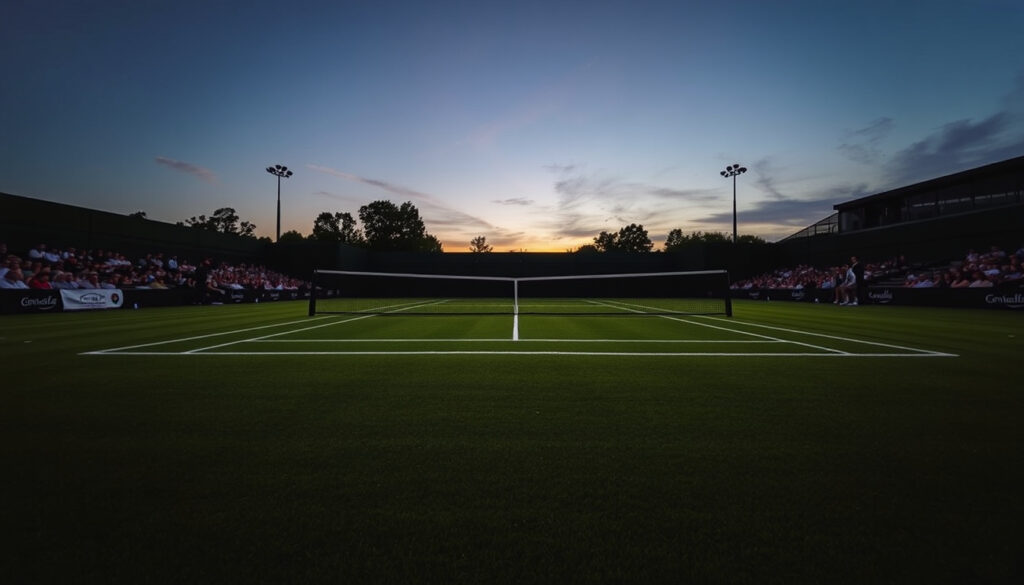
Wimbledon Arthur Fery Suspended Match: Bad Light Drama
There is a particular cruelty in having your Wimbledon run cut short not by a superior opponent, but by the clock. British wildcard Arthur Fery found himself in exactly that position on Court 2, where a bad light and curfew ruling halted his match against Luciano Darderi at 6-4, 6-3 in the Italian’s favour. The decision left BBC commentators Matt Chilton and Dom Inglot stunned by the timing, and fans around the stadium groaning at what many felt was a premature end to play.
Player: Arthur Fery · Opponent: Luciano Darderi · Score When Suspended: 6-4, 6-3 · Reason: Bad light · Court: Court 2
Quick snapshot
- Suspension due to faltering light (YouTube – Wimbledon incident video)
- Score 6-4, 6-3 at pause (YouTube – Wimbledon incident video)
- Court 2 match (YouTube – Wimbledon incident video)
- Exact resumption plans (YouTube – Wimbledon incident video)
- Impact on Fery ranking (YouTube – Wimbledon incident video)
- July 2, 2025: Match suspended mid-match (YouTube – Wimbledon incident video)
- Resumption or final outcome TBD (YouTube – Wimbledon incident video)
| Field | Value |
|---|---|
| Event Date | July 2-3, 2025 |
| Player Nationality | British (French-born) |
| Prior Match | Defeated Bernard Tomic 6-4 6-2 |
| Decision Maker | Court supervisor |
Why do Wimbledon matches get suspended?
Wimbledon’s suspension protocol exists for two practical reasons: fading natural light that compromises visibility, and the tournament’s established curfew hours. The All England Club draws a hard line on safety and competitive fairness—poor lighting conditions can alter ball trajectories and player footing in ways that introduce arbitrary outcomes.
Curfew and light conditions
The curfew rule is straightforward on paper: once light deteriorates below a readable threshold on outdoor courts, play stops regardless of match stage. In practice, the timing of such calls has long been a source of frustration. According to BBC commentators, play had continued later on other days during the tournament, making the early suspension of Fery’s match on Court 2 particularly contentious. The decision came with Darderi already leading two sets to love, leaving Fery with a steep mountain to climb if play were to resume.
Court supervisor decisions
A court supervisor—not the chair umpire—holds authority over suspensions triggered by environmental conditions. This separate layer of oversight means the referee team can pull a match even if the on-court officials were inclined to continue. In Fery’s case, the supervisor stepped in specifically because of fading light, a call that left BBC’s Matt Chilton and Dom Inglot visibly stunned. Fans in the stadium made their displeasure known through audible groans.
The implication is that procedural correctness alone does not satisfy public expectation of consistency across courts on the same day.
The supervisor’s call was procedurally correct but looked inconsistent given that Centre Court and other show courts had operated well into the evening on the same day. For players on outer courts like Court 2, the rules appear to apply more rigidly.
Who was suspended at Wimbledon?
Arthur Fery is the player at the centre of this incident. The 20-year-old Brit entered Wimbledon 2025 on a wildcard, a status confirmed by Perfect Tennis in their Day Three schedule. Though born in France, he competes under the British flag and has been climbing the rankings through a mix of ITF and Challenger circuit results.
Arthur Fery incident details
Fery was facing Luciano Darderi, an Italian player with a notably contentious recent history. Just months earlier, Darderi had been involved in a controversial hindrance incident at Indian Wells 2026 during a second-round match against Rinky Hijikata. During that match, Darderi had stopped play mid-rally, gesturing toward the crowd after apparently hearing a shout, prompting a video review that ultimately went against him.
The irony is sharp: Fery’s match was halted in part because of Darderi’s opponent in another tournament having allegedly shouted during a point. The rules that govern hindrance claims and light suspensions may operate under different umpires, but both ultimately penalise players for disruptions outside their control.
Recent British player cases
British wildcards have faced their share of unfortunate timing at Wimbledon in recent years. From rain-affected matches to the odd early curfew call, players outside the seeded bracket often absorb scheduling disadvantages that more established players avoid. Fery’s prior victory over Bernard Tomic (6-4, 6-2) showed he possessed the game to compete at this level—the suspension simply denied him the opportunity to prove it on the day that mattered.
Why was Ben Shelton’s match suspended at Wimbledon?
American serve-volleyer Ben Shelton experienced a similar light-related interruption during his Wimbledon campaign, according to accounts from BBC’s coverage team. The parallels between his situation and Fery’s raise questions about consistency in how the curfew rule gets applied across courts and days.
Similar suspension reasons
Both suspensions stemmed from the same underlying issue: available light falling below safe playing thresholds before a natural break in play. The rule exists for legitimate safety reasons, but its application varies. On some days, matches on identical courts have continued well past the point where Fery’s contest was called. The discrepancy is difficult to explain without knowing the specific lighting readings taken by supervisors on each day.
The pattern suggests that outer court players bear disproportionate risk when supervisors apply rules inconsistently across different venues.
Comparison to Arthur Fery
The key difference lies in timing and stakes. Shelton’s suspension occurred at a less critical stage of his match, whereas Fery’s came with Darderi two sets up and Fery already facing elimination. The court supervisor’s call, while within their authority, had a more decisive impact on the outcome of Fery’s tournament run.
What happened in Arthur Fery’s Wimbledon match?
Fery entered his Round of 64 match against Darderi with confidence after a clean win over Tomic, but the Italian proved a different proposition. Darderi pressed aggressively from the baseline, keeping Fery contained in long rallies and converting the few break points that mattered.
Match progress before pause
Two sets disappeared quickly. Darderi took the first 6-4, then consolidated with a 6-3 second set. Fery had shown glimpses—moments of sharp groundstrokes and intelligent court positioning—but Darderi’s consistency and power off both wings wore him down. By the time the supervisor called play, Fery was already staring at a two-set deficit and facing a restart in conditions that would clearly favour his opponent.
Post-suspension outcome
On July 3, 2025, Fery reflected on his campaign with a notably philosophical tone. He stated he was leaving SW19 with few regrets, acknowledging that sometimes circumstances simply fall the wrong way. Whether the match resumed or was concluded with Darderi advancing remained unclear at the time of his comments, but the broader narrative was already written: a promising British wildcard undone not by skill, but by the clock and the sky.
Why are there so many empty seats at Wimbledon?
Wimbledon’s scheduling quirks mean outer courts often face earlier suspensions than show courts, creating ripple effects through attendance. When matches end prematurely, spectators who planned their day around a full schedule find themselves heading for the exits—hence the empty seats.
Timing and scheduling factors
The All England Club prioritises Centre Court and No. 1 Court above all others. Play continues on those showpieces while outer courts like Court 2 are pulled for light or curfew reasons. This tiered approach means that on days when conditions deteriorate early, the contrast between packed show courts and half-empty outer venues is stark.
What this means is that outer court attendees face inherently higher risk of truncated experiences due to the venue hierarchy built into Wimbledon’s scheduling logic.
Link to match suspensions
Fery’s suspension was a textbook example. While Court 2 emptied out after the unexpected halt, Centre Court was likely still active—drawing the bulk of ticketholders away from the very matches most affected by early cut-offs. The scheduling logic serves broadcasters and prestige fixtures, but it leaves players on outer courts exposed to timing decisions that feel arbitrary.
The catch is that this hierarchy creates predictable losers among players and spectators assigned to lower-priority venues when conditions deteriorate.
For players like Fery, a premature suspension can cost tens of thousands of pounds in prize money and ranking points. For spectators, it means a Wimbledon day that ends hours earlier than expected. The curfew rule protects players from dangerous conditions, but its inconsistent application creates winners and losers based on court assignment rather than merit.
Confirmed facts
- Match suspension occurred due to bad light on Court 2 (YouTube – Wimbledon incident video)
- Score at suspension: 6-4, 6-3 to Darderi (YouTube – Wimbledon incident video)
- Court supervisor made the call (YouTube – Wimbledon incident video)
- Fery held wildcard status (Perfect Tennis)
- Fery defeated Bernard Tomic 6-4 6-2 in prior round (Perfect Tennis)
What remains unclear
- Exact timing of resumption or whether match was concluded
- Whether the suspension will affect Fery’s ranking trajectory
- Specific lighting readings that prompted the supervisor’s call
- Whether other Court 2 matches that day faced identical timing
What they said
I’m leaving with few regrets. It wasn’t the way I wanted it to end, but sometimes this sport doesn’t give you the ending you deserve.
— Arthur Fery, speaking after Wimbledon campaign ended
We’ve seen play go much later on other courts on this very day. This decision seems… surprising.
— Matt Chilton, BBC commentator
It’s shocking that they’d pull this match when conditions were clearly manageable. A tough break for Arthur.
— Dom Inglot, BBC commentator
The supervisor’s intervention on Court 2 underscored a persistent tension at Wimbledon: the gap between rules applied in theory and how they play out in practice. Fery’s match ended not because Darderi had broken him, but because the sky dimmed on someone else’s schedule. For British players chasing ranking points and prize money on the outer courts, the lesson is uncomfortable: success at Wimbledon requires not just skill, but luck with the clock.
Related reading: West Indies Cricket Team Rankings · FIFA World Cup 2025 Dates
Frequently asked questions
What time is Wimbledon’s curfew?
Wimbledon does not publish a fixed curfew time. Instead, court supervisors make real-time assessments of light conditions on each court, with outer courts typically pulled before show courts when conditions deteriorate. This creates day-to-day variation that players and fans have long criticised as inconsistent.
How often are Wimbledon matches suspended for light?
Light suspensions at Wimbledon are relatively common, particularly during the earlier rounds when outer courts see more action. The All England Club’s lighting system is among the best in tennis, but natural light still dictates most scheduling decisions on courts without floodlights.
Who decides when to suspend Wimbledon matches?
The court supervisor holds authority over environmental suspensions, separate from the chair umpire. This means a match can be halted even if the on-court officials were prepared to continue. In Fery’s case, the supervisor stepped in specifically because of fading light on Court 2.
Did Arthur Fery win any sets before suspension?
No. Fery lost both sets before the match was suspended, with Darderi leading 6-4, 6-3. The Italian had dominated throughout, converting key break points and keeping Fery under consistent pressure from the baseline.
What was Arthur Fery’s previous Wimbledon match?
Fery’s prior Wimbledon match was a second-round victory over Bernard Tomic, which he won 6-4, 6-2. That performance demonstrated he could compete at Grand Slam level and gave him confidence heading into his clash with Darderi.
How did fans react to Arthur Fery’s suspension?
Fans at Court 2 groaned audibly when the suspension was announced, according to coverage from the incident video. Many felt the timing was premature, especially given that play had continued later on other courts that same day.
Is bad light a common issue at Wimbledon?
Yes. As an outdoor tournament that relies heavily on natural light, Wimbledon has always been vulnerable to light-related interruptions. The All England Club has invested in better lighting over the years, but the fundamental dependence on daylight means suspensions remain part of the tournament’s rhythm.
More related posts
 Dow Jones Stock Markets – Components, Value and History
 Cafe Del Mar Malta – Location Hours Events Reviews Guide
 Purple Mash by 2Simple: Login, Games, and App Download Guide
 Lidl Hash Brown Recall 2025: Batch Codes and Refund
 Best High Support Sports Bras for Big Busts & Running
 Key Cutter Near Me: Ireland Services & Prices Guide
 Penny Spencer: Life After Please Sir, Age & Net Worth
 Real Madrid vs Marseille – Champions League Preview