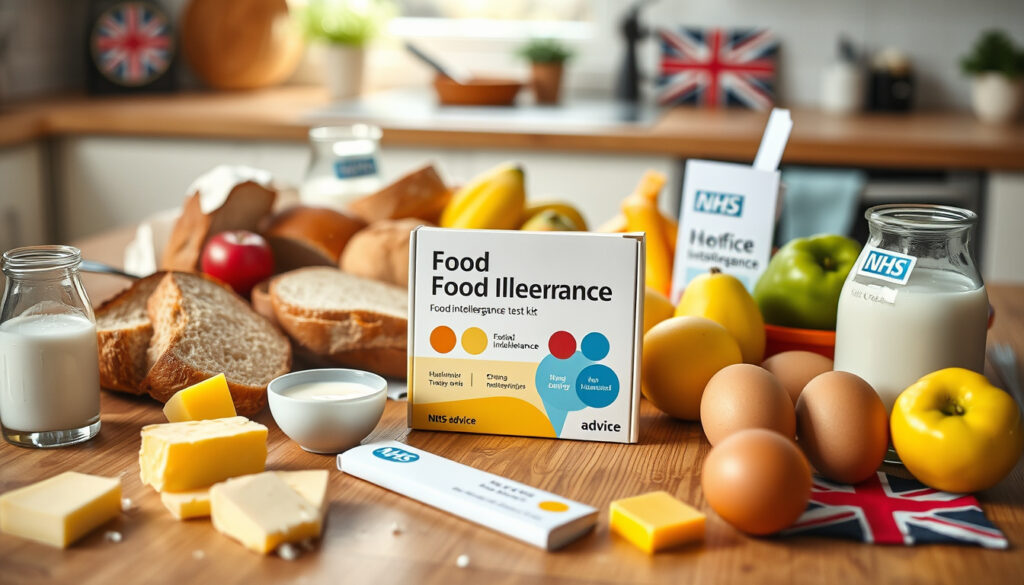
Food Intolerance Test UK: Best Options & NHS Advice
If you’ve ever felt bloated, foggy, or simply off after a meal with no obvious cause, you’re far from alone. Nearly 30% of UK adults report food hypersensitivity each year — and the gap between NHS wait times and commercial test kits has never been wider.
Big 9 Allergens: cause 90% of reactions (USDA) ·
YorkTest Track Record: 40+ years ·
Largest Home Panel: 1,450 items ·
NHS First Step: elimination diet trial ·
Boots Partner: YorkTest
Quick snapshot
- NHS uses elimination diets, not IgG blood tests, as first-line diagnosis (NHS)
- YorkTest has over 40 years of experience in home-to-lab food intolerance testing (Boots Health Hub)
- The Big 9 allergens account for the majority of food-related reactions (NHS)
- Regulatory framework for at-home testing hasn’t kept pace with market growth
- Whether Boots-YorkTest partnership will expand beyond current tiered packages
- More NHS trusts trialling dietitian-led intolerance programmes
- Speed (home kits: 3–7 days) vs clinical validation (NHS wait: weeks-months) (American Academy of Allergy)
- IgG test methodology is scientifically debated (American Academy of Allergy)
- Hair-based bio-resonance lacks established scientific basis (UK Food Intolerance)
The table below compares the main UK providers across price, scope, and turnaround.
| Label | Value |
|---|---|
| Top UK Provider | YorkTest (Boots, own site) |
| NHS Recommendation | Diet exclusion first |
| Allergen Coverage | Big 9: USDA list |
| Largest Panel | 1,450 items (UK Food Intolerance) |
| YorkTest Turnaround | 5–7 days |
| Boots Discount Code | Boots10 = £10 off |
Do NHS recommend food intolerance tests?
The NHS position is unambiguous: it does not endorse or provide IgG-based food intolerance blood tests. According to NHS guidance on food intolerance, the first step for anyone suspecting a problem is typically a referral to a dietitian, not a commercial test kit.
NHS testing approach
When you see your GP about food intolerance symptoms, the NHS pathway generally involves one or more of three methods:
- Elimination diet: A supervised trial where suspected foods are removed and reintroduced systematically under dietitian guidance.
- Blood tests: Used primarily for lactose intolerance (lactose tolerance test) or to rule out IgE-mediated allergy — not for IgG sensitivity screening.
- Breath tests: The standard diagnostic tool for lactose or fructose malabsorption, conducted in a clinical setting.
The NHS refers to a dietitian for suspected intolerance rather than directing patients to home test kits. This approach is free via GP referral but requires patience — waiting lists for dietetic services can stretch to weeks or months.
Exclusion diet method
An elimination diet under NHS care is structured and evidence-based. You work with a dietitian to identify a shortlist of suspect foods — often based on your symptom diary — then remove them completely for 2–4 weeks before reintroducing them one at a time. Any return of symptoms flags that food as a likely trigger.
The key difference from home testing: NHS elimination diets are tailored by a qualified professional who can ensure you maintain proper nutrition during the process. No home kit can replicate that level of clinical oversight.
For patients willing to wait, the NHS route costs nothing and carries the credibility of dietitian-supervised diagnosis. For those frustrated by wait times, home tests offer speed — but with a trade-off in clinical validation.
What is the best food intolerance test in the UK?
The answer depends on what you prioritise: clinical credibility, price, breadth of foods tested, or turnaround speed. Here’s how the leading options stack up.
YorkTest overview
YorkTest is the established leader in UK home food intolerance testing, with over 40 years of experience and a Boots retail partnership. Their Premium Food Sensitivity test measures IgG reactions to 200 foods, uses accredited labs, and includes a 30-minute nutritional consultation with your results. Turnaround is 5–7 days. Prices range from £99 to £299 depending on the package.
YorkTest also offers an IgE allergy component — testing 23 core foods and 19 environmental allergens — which many competitors don’t include. Their Feefo rating sits at 4.6★ based on customer reviews.
YorkTest’s credibility comes with a premium price tag. Their £99 entry-level kit tests fewer foods than mid-tier competitors like Biosensitive or Check My Body Health, which offer more items at lower prices.
UK Food Intolerance panel
The UK’s largest home testing panel comes from UK Food Intolerance, which uses hair-based bio-resonance analysis to test up to 1,450 foods and items. Their Ultimate package costs as little as £24.99, with results delivered in 48–72 hours. That price and speed are compelling — but the methodology has attracted significant scientific scepticism.
The UK Food Intolerance website explicitly states that hair-based bio-resonance tests are not suitable for medical allergy diagnosis. This is an important distinction: they may flag patterns in your diet but lack the clinical validation of blood-based IgG testing.
Other options
A crowded field of providers competes for your attention. Based on comparison data from Biosensitive and others, here are the key players:
The comparison table below shows how providers differ on price, foods tested, and turnaround.
| Provider | Foods Tested | Price | Turnaround | Rating |
|---|---|---|---|---|
| YorkTest | 40–200+ | £99–£299 | 5–7 days | 4.6★ Feefo |
| Biosensitive | 200+ | £125 | 3–5 days | 4.8★ |
| Check My Body Health | Up to 286 | £229.99 | 3–5 days | 4.5★ |
| SupplyLife | 64–209 | £137–£239 | ~7 days | — |
| Lifelab Testing | 40–160 | £105–£200 | 3–5 days | 4.5★ |
| UK Food Intolerance | Up to 1,450 | £24.99+ | 48–72 hours | — |
Biosensitive has emerged as a notable disruptor, offering the fastest turnaround and competitive pricing. Check My Body Health claims the title of Verywell Health’s No.1 Best At-Home Food Intolerance Test, with over 9,000 five-star reviews.
YorkTest wins on pedigree — 40 years of testing gives it unmatched track record and Boots distribution. Biosensitive wins on value and speed. UK Food Intolerance wins on breadth and price, but the methodology raises accuracy questions.
Is it worth doing a food intolerance test?
This is the most contested question in the field, and the honest answer depends on your goals, your symptoms, and which provider you’re considering.
Pros and cons
The case for home testing is practical: convenience, speed, and access. A home kit can deliver answers in days rather than months, and you don’t need a GP referral. For people who’ve already tried basic dietary adjustments without success, a test can provide a starting point.
The case against is rooted in scientific caution. The American Academy of Allergy, Asthma & Immunology does not recommend IgG-based food sensitivity tests, noting that elevated IgG antibodies may simply reflect regular exposure to foods rather than intolerance. Gene Food, a health blog that has reviewed these tests critically, notes: “Despite the fact that they aren’t recommended by the American Academy of Allergy, Asthma & Immunology, I see a lot of blogs recommending the same at-home IgG-based food sensitivity tests.”
Upsides
- Fast results (3–7 days vs NHS wait times)
- No GP referral required
- Tests hundreds of foods at once
- Includes nutritional consultation on most packages
- Identifies patterns that elimination diets might miss
- YorkTest has 40+ years of clinical experience
Downsides
- IgG test accuracy is scientifically contested
- Hair-based bio-resonance lacks clinical validation
- False positives can lead to unnecessary food restrictions
- Expensive (£99–£299 for blood tests)
- NHS doesn’t endorse any commercial home kit
- Removing foods based on results without supervision risks nutritional gaps
Guts UK view
Charity perspectives add nuance. Guts UK, a digestive health charity, has published guidance on food intolerance testing. Their position acknowledges the interest in white cell food group testing but emphasises that clinical diagnosis — via dietitian-supervised elimination — remains the gold standard.
The charity warns that home tests can sometimes create anxiety by flagging a long list of borderline reactions, leading people to restrict foods unnecessarily. Their recommendation is to view home test results as a guide, not a diagnosis, and to discuss any significant dietary changes with a healthcare professional.
“The key is to distinguish between a useful guide and a medical diagnosis. Home tests can point you in a direction, but they shouldn’t replace professional clinical judgment.”
— Guts UK guidance on food intolerance testing
Does Boots do food intolerance testing?
Yes, Boots is a significant retailer for food intolerance testing in the UK. Through a partnership with YorkTest, Boots stocks a range of home testing kits and provides detailed product information through their health hub.
Boots kit details
Boots stocks YorkTest kits including the Premium Food Intolerance Test, which measures IgG reactions to 200 foods and includes an accredited laboratory analysis. Results come within 7 days, and every kit includes access to a 30-minute nutritional consultation to help interpret your results.
The Boots Health Hub article on YorkTest at Boots highlights the partnership’s focus on IBS-related intolerance testing, noting that Boots sells YorkTest kits for IBS-related intolerance testing at home. A Boots10 discount code offers £10 off select YorkTest kits, making the entry-level package more accessible.
YorkTest at Boots
The Boots-YorkTest partnership is notable because it brings clinical-grade testing into a high-street retail context. You can purchase a kit in-store or online, activate it at home with a finger-prick blood sample, and ship it to YorkTest’s accredited lab. The consultation element is bundled in — a key differentiator from cheaper competitors that charge extra for expert interpretation.
Boots also provides educational content through their health hub, positioning the service as part of a broader digestive health offering alongside IBS advice and gut wellness guidance.
Boots offers one of the most accessible routes to YorkTest testing in the UK, with the backing of a trusted retailer and a bundled consultation. The Boots10 code reduces the entry cost, though the £99 starting price still exceeds cheaper alternatives like Biosensitive.
“YorkTest has over 40 years of expertise in offering home-to-laboratory food intolerance and allergy testing services.”
— Boots Health Hub on the YorkTest partnership
Do food intolerance tests work?
This question sits at the heart of the debate, and the answer is more nuanced than a simple yes or no. The efficacy of food intolerance tests depends heavily on the methodology, what you’re testing for, and how you interpret the results.
Accuracy concerns
The scientific community’s primary concern with IgG-based tests is that elevated IgG antibodies may not indicate intolerance at all. Some researchers suggest that high IgG levels simply reflect regular consumption of a food — the body’s normal immune response to repeated exposure — rather than an adverse reaction.
The American Academy of Allergy, Asthma & Immunology’s position is direct: IgG testing is not recommended as a diagnostic tool for food sensitivity. This is a tier-2 source with significant authority in the field, and it’s worth taking seriously when evaluating commercial claims.
Hair-based bio-resonance tests face even greater scepticism. While companies like UK Food Intolerance can test 1,000+ items for under £25, the mechanism — detecting electromagnetic patterns in hair samples — has no established scientific basis for predicting food intolerance. UK Food Intolerance’s own website notes these tests are not suitable for medical allergy diagnosis.
Allergy vs intolerance
It’s crucial to distinguish between food allergy and food intolerance, because the testing methods and stakes differ significantly.
- Food allergy: An IgE-mediated immune response that can be life-threatening. Testing involves skin prick tests or specific IgE blood tests, typically ordered by a GP or allergist.
- Food intolerance: A non-immune reaction (often digestive enzyme deficiency or pharmacological sensitivity) that causes discomfort but not anaphylaxis. IgG blood tests aim to identify these, but the science is contested.
YorkTest attempts to cover both by offering an IgE allergy component alongside their IgG sensitivity panel. Their Premium Food Sensitivity test measures IgG to 200 foods via accredited lab analysis, while a separate IgE panel tests 23 core foods and 19 environmental allergens. This dual approach is more comprehensive than most competitors.
The USDA Big 9 allergens — milk, eggs, fish, shellfish, tree nuts, peanuts, wheat, soybeans, and sesame — cause approximately 90% of allergic reactions. These are the foods any reliable allergy test should cover. For intolerance, the landscape is less clear-cut.
Related reading: Exercises for Lower Back Pain: NHS Guide · How to Get Rid of a UTI – Fast Effective Treatments
yorktest.com, innerbody.com, smartblood.co.uk, womenshealthmag.com
Frequently asked questions
What is the difference between food intolerance and food allergy?
Food allergy involves an IgE immune response that can cause immediate, sometimes severe reactions. Food intolerance is a non-immune reaction — often enzyme deficiency or chemical sensitivity — that typically causes digestive symptoms hours later. Allergies can be life-threatening; intolerances are not. Testing methods differ: allergies use IgE blood tests or skin prick tests; intolerances may use IgG tests, elimination diets, or breath tests.
How does an exclusion diet work for food intolerance?
An exclusion diet removes suspected trigger foods for 2–4 weeks under dietitian supervision, then reintroduces them one at a time. Any return of symptoms flags that food as a likely cause. NHS dietitians guide this process to ensure nutritional balance. This is the clinical gold standard but requires patience and professional oversight.
What foods are in the Big 9 allergens?
The Big 9 allergens — milk, eggs, fish, shellfish, tree nuts, peanuts, wheat, soybeans, and sesame — account for approximately 90% of all food-related allergic reactions in the US and are widely recognised internationally. These should be the priority for anyone with allergy concerns.
Are DNA tests reliable for food intolerance?
DNA-based claims for food intolerance have limited peer-reviewed validation. While some platforms analyse genetic markers for enzyme production (like lactase persistence), most commercial DNA intolerance tests lack robust clinical evidence. YorkTest uses blood-based IgG analysis, which is more established — though still debated scientifically.
How long do food intolerance test results take?
Turnaround times vary by provider. YorkTest takes 5–7 days. Biosensitive, Check My Body Health, and Lifelab Testing deliver in 3–5 days. UK Food Intolerance (hair-based) claims 48–72 hours. Most include a consultation to discuss results.
Can I get a food intolerance test from my GP?
Your GP can refer you to an NHS dietitian who may conduct an elimination diet trial, lactose breath test, or blood test for lactose intolerance. However, the NHS does not provide commercial IgG home testing kits. If you want a home test, you’ll need to purchase one privately — YorkTest via Boots is the most accessible NHS-adjacent option.
What symptoms indicate food intolerance?
Common symptoms include bloating, abdominal pain, wind, diarrhoea, skin rashes, fatigue, and headaches — typically appearing hours after eating. Symptoms are usually confined to the digestive system and don’t involve anaphylaxis. If you experience immediate swelling, breathing difficulty, or throat tightness, seek emergency care — these indicate allergy.
Summary
Food intolerance testing in the UK sits in a contested space between clinical credibility and consumer convenience. The NHS clearly prefers dietitian-supervised elimination diets over commercial IgG kits — and that position carries weight, especially given the American Academy of Allergy’s non-endorsement of IgG testing. Yet the demand is real: nearly 30% of UK adults report hypersensitivity, and wait times for NHS dietitians push many toward home testing.
If you’re exploring home testing, YorkTest remains the most established provider — 40+ years of experience, Boots retail presence, and a bundled consultation add genuine value. Biosensitive offers compelling speed and price. But the underlying science of IgG testing deserves scepticism: a positive result tells you which foods your immune system has been reacting to, not necessarily which foods are causing your symptoms.
Consumers who prioritise speed and convenience will find YorkTest via Boots the most accessible entry point, while those seeking clinical validation should pursue the NHS dietitian route despite longer wait times. Either way, interpreting results with professional guidance reduces the risk of unnecessary dietary restriction.
More related posts
 B&Q Halesowen: Address, Opening Times, Discounts & Guide
 Best Thermoses for Coffee – Top Lab-Tested Picks 2025
 Regen Central Tour Company Shutdown: Holidays Cancelled
 Peter Cushing’s Death and Lasting Star Wars Legacy
 Pete Waterman: Biography, Net Worth, and Son’s Brain Tumour
 How to Get Rid of a UTI – Fast Effective Treatments
 Go Compare Travel Insurance: Compare Quotes for Best Cover
 Lucian Freud: His Life, Lovers and Unflinching Portraits