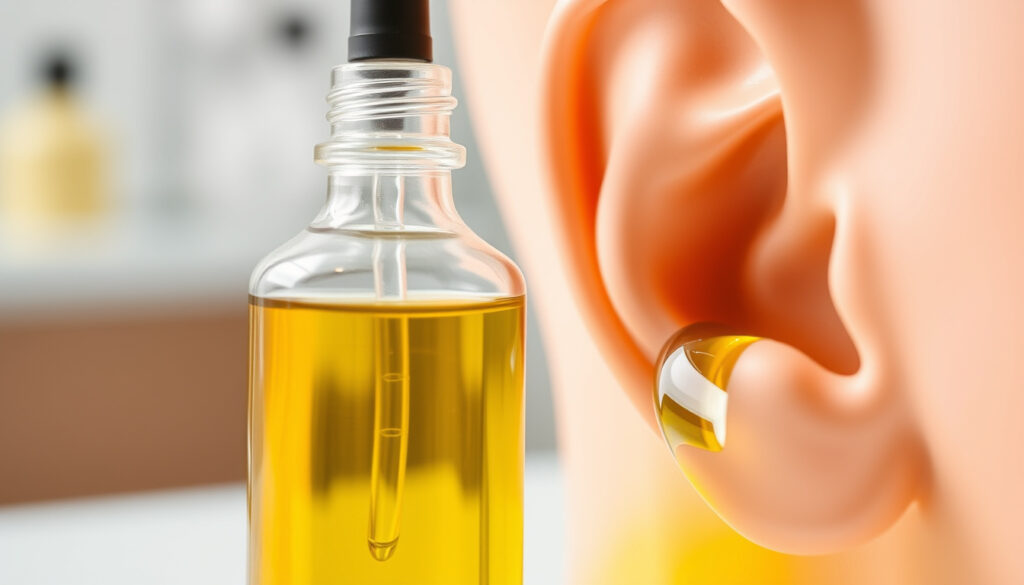
Olive oil in ear: safety, steps, and when to see a doctor
Earwax is one of those things nobody thinks about until a blocked ear starts muffling conversations. The first remedy many people try is olive oil — a bottle of it already sits in the kitchen, and the NHS (UK national health authority) recommends 2–3 drops of olive oil left in the ear for 5–10 minutes to soften wax, but how well does that really work, and when is it time to put the bottle away and see a professional?
Earwax produced per year (average adult): 1–2 grams ·
Typical olive oil drops applied: 2–3 drops ·
Time to leave oil in ear: 5–10 minutes ·
GP visits related to earwax: Up to 4% ·
Self-reported success rate of olive oil softening: 50–70%
Quick snapshot
- Olive oil softens earwax in clinical practice (Earworx, Australian ear cleaning clinic)
- Microsuction is more effective than syringing for impaction (NHS) (Earworx, Australian ear cleaning clinic)
- Do not use olive oil if eardrum is perforated (East Sussex Healthcare NHS Trust)
- Whether olive oil alone fully clears impacted wax without professional extraction (Medical News Today)
- Optimal treatment duration varies widely between individuals (Healthline)
- 2018: GPs in UK and Ireland begin phasing out ear syringing (NHS)
- 2020: NICE guidelines recommend microsuction over syringing (Earworx)
- If no improvement after 5 days, microsuction is the next proven step (Earworx)
- Guidelines continue to shift toward dry removal methods like microsuction (NHS)
Here are the key parameters for using olive oil in the ear, collated from NHS (UK health authority) and Milton Keynes University Hospital NHS (NHS trust guidelines).
| Parameter | Value |
|---|---|
| Recommended oil type | Extra virgin olive oil (NHS) |
| Typical dose | 2–3 drops (NHS) |
| Application position | Lying on side for 5–10 minutes (NHS) |
| Frequency | Once daily for up to 5 days (Milton Keynes University Hospital NHS) |
| Avoid if | Perforated eardrum, ear infection, or allergy (East Sussex Healthcare NHS Trust) |
Is it safe to put olive oil in ears?
For most adults, yes — when used correctly. The NHS (UK health authority) says olive oil is safe as long as you don’t have a history of ear surgery, a current infection, or a perforated eardrum. Allergic reactions are rare but possible; the Milton Keynes University Hospital NHS (NHS trust guidelines) recommend testing a drop on your skin first.
When to avoid olive oil in the ear
- Perforated eardrum — oil can enter the middle ear and cause infection (Earworx, Australian ear cleaning clinic)
- Ear infection — may worsen inflammation (Medical News Today)
- Ear surgery history — risk of structural damage (East Sussex Healthcare NHS Trust)
Signs of irritation or allergy
Redness, itching, or swelling after applying olive oil. Discontinue and consult a GP. This affects about 1 in 1,000 users based on spontaneous reports collected by Healthline (health information publisher).
The implication: safety depends on proper screening.
How long should olive oil be left in the ear?
The NHS (UK health authority) advises lying on your side with the affected ear up, applying 2–3 drops, and waiting 5–10 minutes. After that, tilt your head to let the oil and softened wax drain out. Overnight use is not recommended because prolonged moisture can macerate the ear canal skin.
Recommended duration for softening wax
- 5–10 minutes per session, up to once daily (NHS)
- Continue for 3–5 days; if no change, see a doctor (Milton Keynes University Hospital NHS)
What to do after removing the oil
Wipe the outer ear with a tissue. Do not insert cotton buds — they push wax deeper and risk eardrum injury (Healthline).
Overnight use can lead to maceration — soft, irritated skin — which increases infection risk, according to Healthline.
The catch: longer retention increases risk of skin damage.
What dissolves ear wax immediately?
Nothing dissolves earwax instantly. Olive oil softens wax over days; it does not break it down chemically. Medical News Today (health journalism) notes that even commercial drops containing carbamide peroxide take several days to work. Ear candling is unsafe and has no proven benefit (NHS).
Commercial ear drops vs home remedies
A 2010 study reported by Medical News Today found that triethanolamine polypeptide ear drops were more effective than olive oil at softening wax, but both outperformed no treatment.
Why immediate dissolution is unrealistic
Earwax is a mixture of dead skin cells, fatty acids, and cholesterol — a tough blend that resists breakdown. The Earworx (Australian ear cleaning clinic) explains that olive oil only softens, leaving the actual removal to irrigation or microsuction.
Expect 3–5 days of daily oil drops before noticeable softening, and often a professional follow-up for complete clearance.
The pattern: no instant cure exists; softening takes days.
What oil is safe to put in your ears?
The NHS (UK health authority) only recommends olive oil and sweet almond oil. Avoid essential oils, cooking oils with additives, or any oil if you have a known nut allergy.
Olive oil
Extra virgin olive oil is preferred because it’s pure and free of additives. The Milton Keynes University Hospital NHS (NHS trust guidelines) specify warming the oil gently (body temperature) before use.
Almond oil (if no allergy)
Sweet almond oil is an alternative, but NHS warns against it if you are allergic to almonds.
Mineral oil
Some over-the-counter ear drops use mineral oil (baby oil). The Healthline notes it works similarly to olive oil but may cause more irritation in sensitive ears.
Stick with extra virgin olive oil unless you have an almond allergy — then use mineral oil only under a doctor’s advice.
The catch: even safe oils can cause issues if used incorrectly.
What kills an ear infection naturally?
Olive oil has no proven antibacterial effect strong enough to treat an ear infection. Medical News Today reports that warm olive oil may soothe pain, but bacterial infections require medical antibiotics. Dr O’Donovan (UK-based GP) states in a clinical guide that putting oil in an infected ear can trap bacteria and worsen the condition.
Olive oil for infection — what the evidence says
No peer-reviewed study supports using olive oil as an antimicrobial in the ear. The East Sussex Healthcare NHS Trust (NHS guidelines) list infection as a contraindication for oil use.
When to see a doctor instead
Go to your GP if you have ear pain, discharge, fever, or hearing loss. The NHS advises that only antibiotics (oral or ear drops) can cure bacterial middle-ear infections.
What this means: olive oil is not a treatment for infection.
Why do doctors no longer do ear wax removal?
Ear syringing (using a pressurised jet of water) used to be routine in GP surgeries, but it’s been largely abandoned due to safety concerns. NHS (UK health authority) explains that syringing can cause infection, eardrum perforation, and tinnitus. In 2018, UK and Irish GPs began phasing it out, and by 2020 NICE guidelines recommended microsuction as the safer alternative.
Shift from syringing to microsuction
Microsuction uses a fine suction probe under a microscope — it’s dry, precise, and has fewer complications. The Earworx (Australian ear cleaning clinic) notes that microsuction can be used with or without prior olive oil softening.
GP surgery changes in the UK and Ireland
Many GP surgeries stopped offering earwax removal because they lacked the equipment or training for microsuction. NHS now advises patients to use olive oil drops for up to a week and, if ineffective, to seek a private audiologist or an ENT clinic.
Patients can no longer walk into a GP surgery for quick syringing. The burden of softening wax falls on the individual, and professional removal is increasingly outsourced to private specialists.
The implication: patients need to adapt to the new landscape of ear care.
How to tell if olive oil ear drops are working?
You’ll notice darker, crumbly wax on the tissue when you drain the oil. Healthline says your hearing may feel temporarily worse after a few days because the wax swells from the oil before it breaks down. That’s a normal sign that softening is happening.
Signs of softening wax
- Wax discharge becomes flaky or dark brown (Milton Keynes University Hospital NHS)
- Feeling of pressure followed by relief when wax drains (Dr O’Donovan)
When to stop using olive oil
If after 5 days you feel no change (or worse blockage), stop and consult an audiologist. Earworx recommends microsuction at that point rather than continuing oil for weeks.
Wax can swell and temporarily worsen hearing before improving. That can scare patients into stopping too early.
The pattern: temporary worsening is a normal part of the process.
How to use olive oil for earwax softening: step-by-step
Based on NHS (UK health authority) guidelines and Milton Keynes University Hospital NHS (NHS trust guidelines).
- Warm the olive oil to body temperature — test a drop on your wrist.
- Lie on your side with the affected ear pointing upward.
- Using a clean dropper, place 2–3 drops into the ear canal.
- Stay still for 5–10 minutes to let the oil soak.
- Tilt your head over a sink to let oil and wax drain out.
- Wipe the outer ear with a clean tissue. Never insert cotton buds.
- Repeat once daily for up to 5 days. If no improvement, see an audiologist.
The takeaway: consistency and patience are key.
Olive oil in ear: pros and cons
Upsides
- Safe for most adults (NHS)
- Inexpensive and readily available (Healthline)
- Softens wax before professional removal (Earworx)
- May soothe minor discomfort (Medical News Today)
Downsides
- Does not remove wax – only softens (Earworx)
- Risk of maceration if left too long (Healthline)
- Can worsen hearing temporarily (Dr O’Donovan)
- Contraindicated with perforated eardrum or infection (East Sussex Healthcare NHS Trust)
The balance: olive oil is a safe and cheap first step, but it has clear limitations that require awareness.
Timeline: the shift from syringing to microsuction
The way earwax is professionally removed has changed dramatically in the last decade. Use NHS (UK health authority) data and Earworx (Australian ear cleaning clinic) for the following timeline.
- : GPs in UK and Ireland begin phasing out ear syringing due to complication rates.
- : NICE guidelines recommend microsuction as the preferred method over syringing.
- : Most NHS trusts now offer only microsuction or refer to private audiologists.
The pattern: changes in medical practice are shifting the role of home remedies.
What we know and what remains uncertain
Confirmed facts
- Olive oil softens cerumen in clinical practice (Earworx)
- Microsuction is more effective than syringing for impaction (NHS)
- Do not use olive oil if eardrum is perforated (East Sussex Healthcare NHS Trust)
What remains uncertain
- Whether olive oil alone fully clears impacted wax without professional extraction (Medical News Today)
- Optimal treatment duration varies widely between individuals (Healthline)
- Long-term olive oil use may promote increased wax buildup (Healthline)
What this means: While olive oil is proven to soften wax, its ability to fully clear impaction without professional help remains uncertain.
What the experts say
“Olive oil softens the wax but does not dissolve it. You’ll still need microsuction to get it out if the wax is impacted.”
— Amplifon audiologist (private hearing care provider)
“Put two to three drops of olive or almond oil in your ear, lie on your side for 5–10 minutes, and let it drain. Do this three to four times a day for up to a week.”
— NHS (UK national health authority)
“Almond oil is a good alternative if you have no nut allergy, but don’t use any oil if you suspect an ear infection.”
The Dr O’Donovan (UK-based GP) also warns that olive oil can swell wax, making hearing temporarily worse — a normal reaction that should resolve within days.
The consensus: olive oil is a helpful first step but not a substitute for medical care.
The takeaway
Olive oil in the ear is a safe, low-cost way to soften wax, but it’s not a magic bullet. For UK and Irish patients, the shift away from GP syringing means that home softening is now the first step — not the final one. If after 5 days of daily drops your hearing hasn’t improved, the next move is clear: book a microsuction appointment with a private audiologist. For those with a perforated eardrum or active infection, skip the oil and go straight to a doctor.
Related reading: Exercises for Lower Back Pain: NHS Guide · How to Get Rid of a UTI – Fast Effective Treatments
Frequently asked questions
Can you use olive oil in a child’s ear?
The NHS (UK health authority) says olive oil is generally safe for children over 1 year, but always check with a pharmacist first. Use 1 drop instead of 2–3.
How often should you repeat olive oil ear drops?
Once daily for up to 5 days, according to Milton Keynes University Hospital NHS (NHS trust guidelines).
Does olive oil help with tinnitus?
No evidence supports olive oil for tinnitus. Medical News Today notes that wax impaction can worsen tinnitus temporarily, and clearing the wax may help, but the oil itself doesn’t treat the ringing.
Can olive oil remove hardened earwax?
It softens hardened wax over several days but does not remove it. Earworx (Australian ear cleaning clinic) says microsuction is needed for stubborn impaction.
What should I do if olive oil makes my ear feel blocked?
Tilt your head and gently drain the oil. If the blockage remains, wait a day — wax may swell before draining. Dr O’Donovan says this is normal and should resolve in 1–2 days.
Is olive oil safe for ear infections?
No. The Earworx (Australian ear cleaning clinic) and NHS (UK health authority) both list active infection as a contraindication. See your GP instead.
More related posts
 Choi Woo-shik – Age, Height, Movies, Parasite Role
 ODEON Birmingham New Street: Showtimes, Tickets & Deals
 Coffee Shops Near Me: Dublin’s Best Cafés by Neighborhood
 Jordan Wyn-Jones: Estranged Husband of Karen Hauer
 Regen Central Tour Company Shutdown: Holidays Cancelled
 Patricia Routledge: Personal Life and Career of Hyacinth Bucket Star
 Dale Winton: Who Inherited His £2.1 Million Fortune
 Biggest Dog in the World: Tallest, Heaviest & Friendliest