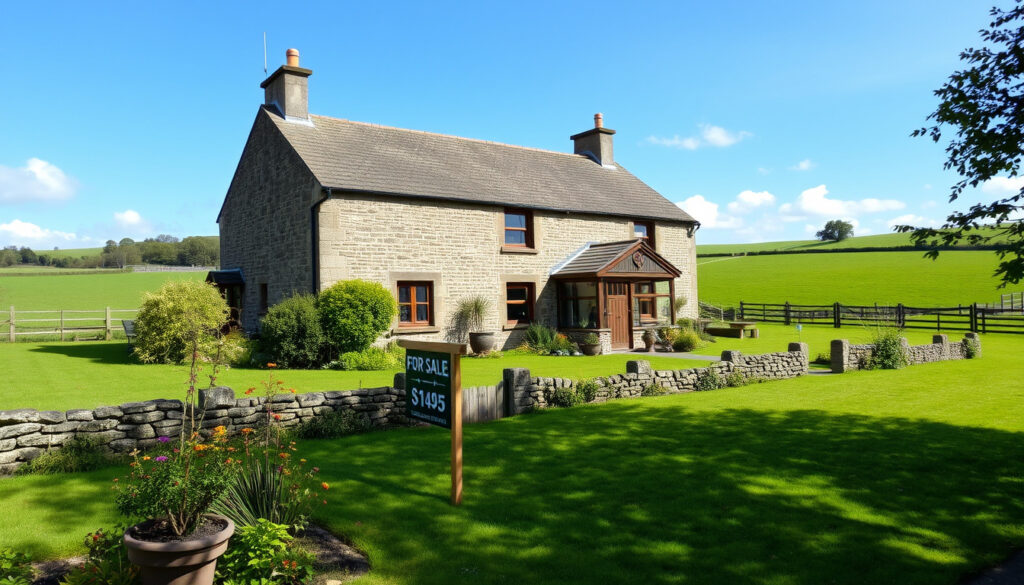
Property for Sale in Fife: Prices, Areas & Buying Tips
Few things draw a person to the east coast of Scotland quite like Fife. It offers historic towns, coastal villages, and a property market that has quietly outperformed much of the rest of the country. Whether you’re looking for a family home in Dunfermline or a rural retreat near Cupar, the region presents a compelling mix of options. This guide digs into prices, neighbourhoods, and the practical steps to buying your next home in Fife.
Market temperature: 57% hot sellers’ market ·
House completion rate: 80.94% ·
Bungalow completion rate: 89.10%
“Every home has a price window that attracts maximum interest.”
— Fife Properties
Quick snapshot
- 80.94% of houses in Fife that leave estate-agent books sell and complete (Fife Properties (local estate agent))
- 89.10% of bungalows in Fife sell and complete (Fife Properties)
- 85.71% of flats in Fife sell and complete (Fife Properties)
- Homes priced up to £250,000 sell 87.03% of the time in Fife (Fife Properties)
- Exact future price trends in Fife — market could shift as new developments come online
- Impact of changes to Land and Buildings Transaction Tax (LBTT) in Scotland on buyer demand
- Number of new housing developments planned for 2025 — not yet centrally published
- Validity of Denton House Research’s 94% completion rate for properties sold within 25 days — based on third-party data cited by Fife Properties
- Fife market temperature at 57% — classified as a hot sellers’ market by Fife Properties (Fife Properties (local estate agent))
- Properties finding a buyer within 25 days have a 94% chance of completing, per Denton House Research (cited by Fife Properties)
- Demand likely to remain strong due to Fife’s proximity to Edinburgh and relative affordability (Fife Properties)
- Expect continued competition for homes under £250,000, the fastest-selling price bracket (Fife Properties)
- Buyers should prepare for a hot market — having funding in place is critical (Fife Properties)
Six price and property-type segments reveal a clear pattern: Fife outperforms the national average across every category.
| Segment | Fife sell-through rate | National average | Source |
|---|---|---|---|
| Houses | 80.94% | 61.04% | Fife Properties |
| Flats & apartments | 85.71% | 45.98% | Fife Properties |
| Bungalows | 89.10% | 57.35% | Fife Properties |
| Homes up to £250k | 87.03% | 63.16% | Fife Properties |
| Homes £250k–£500k | 73.91% | 54.25% | Fife Properties |
| Homes £500k–£750k | 68.37% | 45.77% | Fife Properties |
What is the current state of the property market in Fife?
How has the Fife property market changed in recent years?
- Fife has remained a sellers’ market with a 57% market temperature reading as of early 2024 (Fife Properties (local estate agent)).
- Despite national headwinds, Fife’s sell-through rates for all property types have stayed well above the Scottish average (Fife Properties).
- Demand continues to be fuelled by buyers priced out of Edinburgh and those seeking coastal lifestyles (ESPC (Fife-coverage property portal)).
What factors influence property prices in Fife?
- Proximity to Edinburgh — towns with good train links (Dunfermline, Kirkcaldy) see higher demand (ESPC).
- Scenic coastlines and historic centres (St Andrews, Anstruther, Crail) push prices higher.
- Local employment and universities (St Andrews University) create steady buyer pools.
- Fife Properties notes that even homes over £1 million sell 59.38% of the time, versus 34.78% nationally — a sign of strong demand at the top end (Fife Properties).
Fife’s market isn’t just surviving — it’s outperforming. For buyers, the trade-off is clear: a hot market means less negotiating room, but better odds of securing a home that actually completes.
The takeaway: Fife’s property market has remained a hot sellers’ market, with sell-through rates far above national averages. Buyers should expect competition but can be confident that purchases will complete.
How much does a house cost in Fife?
What is the average price for a detached house?
- Fife’s overall average sits around £195,000, but detached homes typically range from £250,000 to £400,000 depending on location (Fife Properties (price-bracket data)).
- Homes between £250,000 and £500,000 sell 73.91% of the time in Fife, well above the 54.25% national average (Fife Properties).
Are there any cheap areas in Fife?
- The most affordable towns include Kirkcaldy and Methil, where homes often list for £100,000–£150,000 (Fife Properties (high sell-through in low price bracket)).
- One-bedroom flats start from around £80,000–£130,000 in these areas.
- At the other end, St Andrews and coastal villages like Elie command £300,000–£800,000.
The pattern: Price dispersion in Fife is wide — a buyer on a tight budget has genuine options, while the premium coastal and university segments remain fiercely competitive.
The takeaway: Average prices vary dramatically across Fife, from under £100,000 in Methil to over £800,000 in St Andrews. Buyers on a budget have real choices, but need to act fast in the most affordable brackets.
Which are the best areas to buy property in Fife?
What are the top towns for families?
- Dunfermline — historic city with good rail links to Edinburgh and a mix of Victorian and modern homes (ESPC (area coverage)).
- Kirkcaldy — affordable seaside town with good schools and amenities (Lawrie Estate Agents (Scottish property firm)).
- Glenrothes — newer town with new-build developments and good transport.
- Cupar — rural market town with a strong community feel.
Where can I find rural properties in Fife?
- North Fife around Cupar, Newburgh, and the Howe of Fife offers cottages and farmhouses with land. These are less frequent on the market but priced competitively versus urban areas.
- Coastal villages like Anstruther and Crail provide sea-view properties, though prices are higher due to holiday-home demand.
- ESPC lists many rural and semi-rural properties across Fife.
The implication: Each area serves a different buyer profile — families lean toward Dunfermline and Kirkcaldy, while rural seekers head north or to the coastal villages.
The takeaway: Fife offers distinct areas for different lifestyles: family-friendly towns with strong transport, rural retreats with land, and coastal villages with sea views. Each has its own price dynamics and competition level.
What types of properties are available in Fife?
Are there many new-build homes in Fife?
- Yes — Dunfermline and Glenrothes have several new developments from national builders.
- New-build apartments and townhouses are also appearing in Kirkcaldy’s waterfront regeneration areas.
- Data from Fife Properties shows that even in a hot market, new-builds must be priced correctly: “every home has a price window that attracts maximum interest.”
What are the most common property styles?
- Victorian and Edwardian terraces are common in Dunfermline and Kirkcaldy.
- Detached and semi-detached houses dominate the wider county, with bungalows particularly popular — 89.10% sell-through rate (Fife Properties).
- Flats and apartments, both period and modern, are concentrated in coastal towns and central locations.
If you’re after a bungalow in Fife, act fast — they sell at a higher rate than any other property type. For buyers, that means less inventory and faster decision windows.
The pattern: Fife’s property mix spans period charm, modern builds, and high-demand bungalows. New developments are concentrated in the larger towns, while coastal and rural areas favour traditional styles.
The takeaway: Bungalows are the hottest property type in Fife, with an 89% completion rate. New-build options are growing in Dunfermline and Glenrothes, but buyers of rural cottages and coastal flats face limited supply.
What do I need to know before buying a property in Fife?
Do I need a home report?
- Yes — every property marketed for sale in Scotland must have a Home Report, which includes a single survey, energy report, and property questionnaire (Lawrie Estate Agents (Scottish property firm)).
- The report is provided by the seller and gives you key condition and valuation info upfront.
What are the legal steps for buying in Scotland?
- Get a mortgage agreement in principle — Lawrie Estate Agents advises having a mortgage appointment before you start viewing (Lawrie Estate Agents).
- Register with local agents and portals — visit agents, list your requirements, and check Rightmove, Zoopla, OnTheMarket, and ESPC (Lawrie Estate Agents).
- Make an offer — in Scotland, offers are usually submitted through a solicitor; the seller responds by issuing a qualified acceptance or negotiating.
- Missives — once both sides agree in writing, the contract becomes legally binding.
- Settlement (completion) — funds transferred and keys handed over; typically takes 6–12 weeks from offer.
“Having a mortgage appointment before you start viewing is crucial to know exactly how much you can borrow.”
— Lawrie Estate Agents
Why this matters: The Scottish buying process differs from England in key ways — the Home Report saves you survey costs up front, but the binding missives mean you can’t back out without penalty after that point. Knowing the sequence keeps you out of legal trouble.
The takeaway: Buyers in Scotland must use a solicitor, review the mandatory Home Report, and follow the missives system. Preparation — especially a mortgage agreement in principle — is essential in Fife’s competitive market.
Related reading: Fife property market guide for buyers and sellers · Which Fife homes actually sell
For a more detailed breakdown, you can refer to our guide covering updated property prices and market trends across the region.
Frequently asked questions
Do I need a solicitor to buy a house in Scotland?
Yes, it is standard practice. A solicitor handles the offer, missives, and title transfers. Most buyers choose a local conveyancing solicitor familiar with Fife.
What is a Home Report?
A pack containing a property survey, energy performance certificate, and property questionnaire. Sellers must provide it before marketing. Buyers use it to assess condition and value (Lawrie Estate Agents).
Are there first-time buyer schemes in Scotland?
Yes. The Scottish Government offers the First Home Fund (closed for applications but may reopen) and shared equity schemes. Check with a mortgage advisor for current options.
How long does the buying process take in Fife?
Typically 6–12 weeks from offer to completion, depending on chain complexity. In a hot market, faster offers can speed things up.
What are the council tax bands in Fife?
Property values determine the band (A to H). Band D average is about £1,500 per year. Check Fife Council’s website for exact rates for a specific property.
Is it better to buy in Fife or Edinburgh?
Fife offers significantly lower prices — average £195,000 vs Edinburgh’s £325,000+ — plus coastal and rural options. The trade-off is longer commute times. For remote workers, Fife often makes more financial sense.
Can I buy a property in Fife as a foreigner?
Yes. There are no restrictions on foreign buyers in Scotland. You will need a UK bank account, mortgage approval, and a solicitor. Buyers from outside the UK may face additional deposit requirements.
For buyers in Fife, the choice is clear: act with preparation and speed — the market favours completions, not hesitation. Whether you target a coastal cottage in Crail or a family home in Dunfermline, the combination of above-average sell-through rates and relatively affordable prices makes Fife one of Scotland’s most practical property markets right now.
More related posts
 Aaron Taylor-Johnson’s 4 Kids: Daughters and Blended Family
 Petting Zoo Near Me: Guide to Finding and Enjoying Pet Farms
 What Happened to Howard Jones? 2026 Update on the British Singer
 Key Cutter Near Me: Ireland Services & Prices Guide
 How to Make Puff Pastry – Step-by-Step Guide to Flaky Layers
 Best High Support Sports Bras for Big Busts & Running
 Ride On Lawn Mower – Best for Hills and Acres
 Petro Matad Share Price (MATD.L): Live Quote, Charts & News