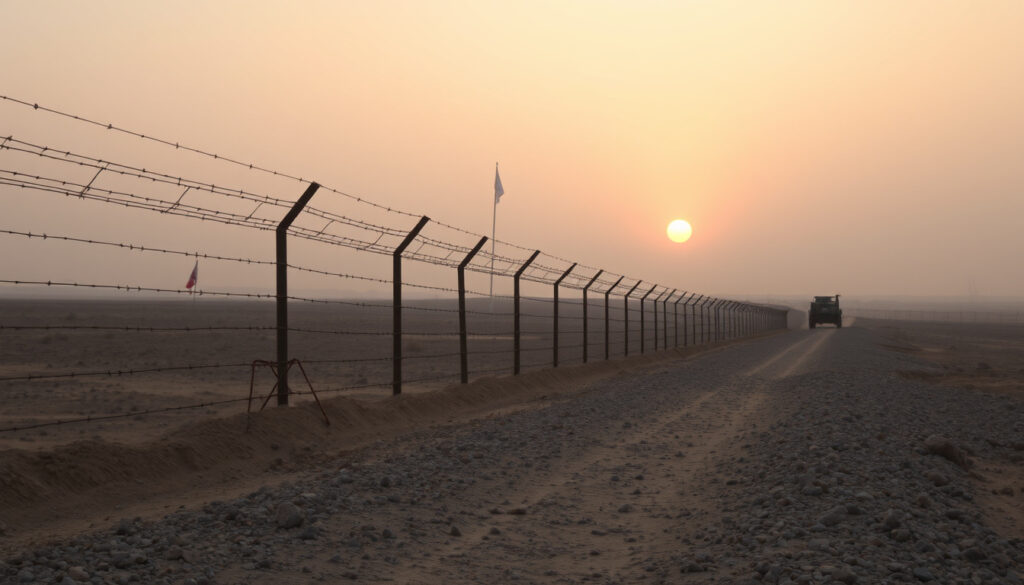
India and Pakistan War: History, Comparison, and Current Conflict
Few rivalries in modern history have shaped a region as dramatically as the one between India and Pakistan. Since their birth as independent nations in 1947, they’ve fought five major wars—the most recent erupting in May 2025—with the disputed territory of Jammu and Kashmir at the heart of nearly every conflict.
Total wars fought: 5 major conflicts (1947, 1965, 1971, 1999, 2025) ·
Most recent conflict: 2025 India–Pakistan conflict (May 2025) ·
Estimated combined casualties: Over 100,000 military and civilian ·
Main disputed territory: Jammu and Kashmir ·
Current status: Ceasefire in effect since May 2025
Quick snapshot
- Kashmir dispute is the root cause of all major wars (Britannica, authoritative reference work)
- 1971 war resulted in creation of Bangladesh (Wikipedia, crowd-sourced encyclopedia)
- 2025 conflict began with Indian missile strikes after Pahalgam attack (Britannica)
- Exact number of total casualties across all wars varies by source
- Ownership of certain ceasefire violations remains disputed between both nations
- Long-term impact of 2025 conflict on regional stability is uncertain
- 1947–1948: First Kashmir War
- 1965: Second Kashmir War
- 1971: Indo-Pakistani War (Bangladesh liberation)
- 1999: Kargil War
- 2025: India–Pakistan conflict
- Ceasefire holds as of May 2025, but tensions remain high (Britannica)
- India suspended the Indus Waters Treaty after the Pahalgam attack (Britannica)
- Both nuclear-armed nations continue diplomatic isolation (Britannica)
| Fact | Value |
|---|---|
| First war | 1947–1948 |
| Latest war | 2025 |
| Total number of major conflicts | 5 |
| Nuclear weapons | Both countries |
| Primary disputed territory | Jammu and Kashmir |
| Current ceasefire status | Active since May 2025 |
Why did India go to war with Pakistan?
The Kashmir dispute has been the recurring trigger for most conflicts, with each war carrying distinct causes and consequences.
1947 Kashmir War
- The first war erupted immediately after partition, triggered by Maharaja Hari Singh’s accession of Jammu and Kashmir to India following a tribal insurgency (Britannica, authoritative reference work).
- Fighting ended in 1948, and a United Nations-brokered ceasefire formally concluded the conflict in 1949 (Britannica).
1965 War
- Operation Gibraltar — Pakistan’s plan to infiltrate forces into Indian-administered Kashmir — sparked the second war (U.S. State Department, diplomatic history office).
- The conflict featured the largest tank battles since World War II and ended in a UN-mandated stalemate (Britannica).
1971 War
- Unlike the Kashmir-centered wars, the 1971 conflict was tied to the Bangladesh Liberation War, triggered by a political crisis in East Pakistan (Wikipedia, crowd-sourced encyclopedia).
- The war ended with a decisive Indian victory and the creation of Bangladesh; more than 90,000 Pakistani soldiers became prisoners of war (Britannica).
Kargil War (1999)
- Pakistani troops infiltrated and occupied strategic heights in the Kargil district of Indian-administered Kashmir, triggering a limited but intense mountain war (Britannica).
- Indian forces recaptured all positions; it was the first armed conflict between the two nations after both tested nuclear weapons in 1998 (Britannica).
2025 Conflict
- On 22 April 2025, a terrorist attack near Pahalgam in Indian-administered Jammu and Kashmir killed 26 civilians (Britannica).
- India launched missile strikes codenamed “Operation Sindoor” on 7 May 2025, triggering brief air and drone exchanges (Britannica).
- A ceasefire was announced on 10 May 2025 after a retaliatory operation by Pakistan (Britannica).
Who won the India and Pakistan war?
Each conflict produced a different outcome, with only one war delivering a decisive winner.
Outcome of 1947-48 war
- The conflict ended with a UN-brokered ceasefire that left Jammu and Kashmir divided between Indian and Pakistani administered territories (Britannica).
- No clear military winner emerged; the dispute was deferred rather than resolved.
Outcome of 1965 war
- A UN-mandated ceasefire left the territorial status quo unchanged (U.S. State Department).
- Both nations claimed victory, but it is widely regarded as a stalemate.
Outcome of 1971 war
- Decisive Indian victory that led to the creation of Bangladesh. Pakistan lost over 90,000 soldiers as prisoners of war (Britannica).
- This is the only war with an unambiguous winner.
Outcome of Kargil war
- Indian forces recaptured all infiltrated positions and forced a Pakistani withdrawal (Britannica).
- Widely considered an Indian victory, though limited in scope.
Outcome of 2025 conflict
- Both sides agreed to a ceasefire on 10 May 2025 after several days of exchanges (Britannica).
- No territorial changes occurred; the conflict was contained and brief.
Five wars, only one with a clear winner. The implication: Kashmir’s disputed status and nuclear deterrence have turned most India-Pakistan conflicts into expensive stalemates with no decisive military result.
What is the current war between India and Pakistan?
The 2025 India–Pakistan conflict
- Fighting erupted in early May 2025 after months of escalating rhetoric following the Pahalgam attack on 22 April (Britannica).
- India launched “Operation Sindoor,” described as preemptive missile strikes against terrorist infrastructure in Pakistan (Britannica).
The 2025 conflict was the most dangerous India-Pakistan confrontation since 1999 because it was the first to involve significant drone and missile exchanges between two declared nuclear powers. The rapid ceasefire suggests both sides recognized the escalation risks — but the underlying Kashmir dispute remains unresolved.
Timeline of 2025 events
- 22 April 2025: Terrorist attack near Pahalgam kills 26 civilians. The Resistance Front initially claimed responsibility, then retracted (Britannica).
- 3 May 2025: India suspended the Indus Waters Treaty (Britannica).
- 7 May 2025: India launched Operation Sindoor — missile strikes inside Pakistan (Britannica).
- 8-9 May 2025: Pakistan retaliated with its own missile and drone attacks.
- 10 May 2025: Ceasefire announced, halting hostilities.
Casualties and aftermath
- The conflict was brief but lethal. Combined military and civilian casualty figures remain contested between the two nations.
- India linked the Pahalgam attack to Lashkar-e-Taiba, which India and the United States designate as a terrorist organization (Britannica).
- India’s suspension of the Indus Waters Treaty — a water-sharing agreement in place since 1960 — marks a significant escalation beyond military confrontation (Britannica).
The pattern: a terrorist attack triggers a brief but intense military response, followed by international pressure for ceasefire. The long-term consequence may be a shift from military to economic and diplomatic warfare, as India’s treaty suspension signals.
What is the main issue between India and Pakistan?
Kashmir dispute explained
- Both countries claim all of Jammu and Kashmir in full (Britannica).
- Since the 1949 ceasefire, India administers roughly half the region; Pakistan administers one-third; China holds the remainder since the 1962 Sino-Indian War (Britannica).
- The Line of Control was established after the 1972 Shimla Agreement.
Cross-border terrorism
- India accuses Pakistan of supporting militant groups operating in Indian-administered Kashmir (Britannica).
- Pakistan denies state sponsorship and raises human rights concerns in the region.
Water sharing issues
- The Indus Waters Treaty (1960) allocated the eastern rivers to India and western rivers to Pakistan. India’s May 2025 suspension represents the most serious challenge to this framework (Britannica).
- Water scarcity in both countries makes this a potentially explosive future flashpoint.
For Pakistan’s agriculture-dependent economy, India’s suspension of the Indus Waters Treaty could create a more consequential crisis than any military defeat. The Indus provides 80% of Pakistan’s irrigation water, and its disruption shifts the conflict from the battlefield to the farm.
Which army is more powerful, India or Pakistan?
India outspends and outnumbers Pakistan across every conventional military domain, but nuclear parity complicates the balance.
| Category | India | Pakistan |
|---|---|---|
| Active military personnel | ~1.45 million | ~650,000 |
| Defense budget (annual) | ~$75 billion | ~$17 billion |
| Nuclear warheads (estimated) | ~160 | ~170 |
| Aircraft carriers | 2 | 0 |
| Global Firepower rank (2025) | 4th | 9th |
| Active combat aircraft | ~600 | ~400 |
- India’s active military is roughly 2.2 times larger than Pakistan’s (Global Firepower, military data aggregator).
- India’s defense budget is approximately 4.4 times larger than Pakistan’s (Stockholm International Peace Research Institute (SIPRI), arms research institute).
- Both countries possess nuclear weapons, with roughly comparable arsenals — making direct full-scale war improbable due to mutually assured destruction (Nuclear Threat Initiative, nonproliferation research body).
- India holds a significant naval advantage, including aircraft carrier capability that Pakistan lacks (Britannica).
The trade-off: India clearly dominates conventional military power, but nuclear parity cancels that advantage in any all-out war scenario. This strategic reality pushes conflict toward limited engagements (Kargil 1999, the 2025 exchange) rather than full-scale war.
Timeline of India-Pakistan conflicts
- : First Kashmir War – partition and first conflict over Kashmir (Britannica)
- : Second Kashmir War – Operation Gibraltar and tank battles (U.S. State Department)
- : Indo-Pakistani War – Bangladesh liberation war (Wikipedia)
- : Kargil War – limited conflict in the mountains of Kargil (Britannica)
- : 2025 India–Pakistan conflict – missile strikes and brief fighting (Britannica)
What’s clear and what’s not
Confirmed facts
- Kashmir dispute is the root cause of all major wars (Britannica)
- 1971 war resulted in creation of Bangladesh (Wikipedia)
- 2025 conflict began with Indian missile strikes after Pahalgam attack (Britannica)
- Three of five wars fought directly over Kashmir (Britannica)
- India suspended Indus Waters Treaty after Pahalgam attack (Britannica)
What’s unclear
- Exact number of total casualties across all wars varies by source
- Ownership of certain ceasefire violations remains disputed
- Long-term impact of 2025 conflict on regional stability is uncertain
- Precise details of who initiated specific 2025 exchanges are contested
Key quotes on India-Pakistan relations
The Kashmir dispute is the central unresolved issue dividing India and Pakistan since independence in 1947. Both countries claim the region in full, and it has been the direct cause of three major wars.
— Britannica, authoritative reference work
The 1971 war was a decisive military victory for India and led to the establishment of Bangladesh as an independent nation, fundamentally altering the balance of power in South Asia.
— Wikipedia, crowd-sourced encyclopedia
The April–May 2025 crisis triggered a brief round of hostilities involving air and missile strikes and drone warfare before a ceasefire was announced on May 10, 2025.
— Britannica
For India, military superiority has not translated into a resolution of the Kashmir dispute. For Pakistan, nuclear deterrence has prevented defeat but not isolated it from the consequences of being the smaller economy. For the people of Kashmir, the cost of seven decades of rivalry has been measured in lives lost and futures uncertain — a consequence that no ceasefire has yet addressed.
For a detailed breakdown of the military outcomes of each major clash, see the comprehensive overview of historical conflicts between India and Pakistan.
Frequently asked questions
What was the role of the United Nations in India-Pakistan wars?
The UN brokered ceasefires for the 1947–48 and 1965 wars and deployed observer missions. However, it has not resolved the underlying Kashmir dispute, and its resolutions calling for a plebiscite in Kashmir have not been implemented.
Are India and Pakistan currently at war?
No. A ceasefire has been in effect since 10 May 2025, ending the most recent conflict. However, tensions remain high, and India suspended the Indus Waters Treaty in May 2025 (Britannica).
What is the Line of Control?
The Line of Control (LoC) is the de facto border dividing Indian-administered and Pakistani-administered Kashmir. It was established after the 1972 Shimla Agreement and has been the site of frequent ceasefire violations.
How many soldiers have died in India-Pakistan conflicts?
Total casualties across five major wars are estimated at over 100,000 military and civilian combined, though exact figures vary by source due to differing record-keeping and disputed battlefield counts.
What triggered the 1971 war?
The war was triggered by a political and humanitarian crisis in East Pakistan (now Bangladesh), where a Pakistani military crackdown on Bengali nationalists led to millions of refugees fleeing into India. India intervened militarily in December 1971 (Britannica).
Which countries are allies of India and Pakistan?
India has strategic partnerships with the United States, Russia, France, and Japan. Pakistan maintains close ties with China, which has invested heavily in the China-Pakistan Economic Corridor, and historically with Saudi Arabia and Turkey.
What is the Simla Agreement?
The Simla Agreement (1972) was signed between India and Pakistan after the 1971 war. It established the Line of Control in Kashmir and committed both nations to resolving disputes bilaterally through peaceful means.
Related reading
More related posts
 Thomas Cromwell: Rise, Fall, Execution of Henry’s Chief Minister
 Best Flea Treatment for Cats: Vet-Recommended Options
 Penny Spencer: Life After Please Sir, Age & Net Worth
 Cast of Hacksaw Ridge: Actors, Roles & Real Figures
 Jack Dee: Biography, Wife, Children, and Net Worth
 DPF Cleaning Near Me: Costs & Best Services in Ireland
 York City FC: History, Stadium, Ownership, and Current Status
 How Much Tax Do I Pay – 2025 Brackets and IRS Guide